BIBLIOTECÁRIA, ATRIZ, EDUCADORA ...


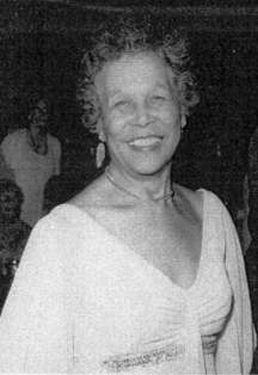
Roberta Byrd Barr was an African American educator, civil rights leader, actress, librarian, and television personality. She was a talented, multifaceted personality with a calm presence, thoughtful demeanor, and a darkly melodious voice which served her well in the many roles she played in the Seattle community.  

Barr was a Seattle Public Schools elementary teacher, librarian and administrator.  During the 1966 school boycott when the black community protested the lack of progress toward desegregation, she headed the Freedom School at the YMCA.  In 1968, she was appointed vice principal at Franklin High School, and in 1973 she was appointed principal of Lincoln High School, becoming the first woman in the history of the Seattle Public Schools to head a high school. 

Barr’s acting and television career began in the early 1960s when she starred in the Cirque Theatre production of “Raisin in the Sun.”  On KCTS/Channel 9, she told stories to young children in a show called “Let’s Imagine.”  Later she moderated the program “Face to Face” on King TV from 1965-1970, and from 1971-1972, on KCTS/9.  The program featured guest speakers talking about controversial topics such as desegregation and welfare.  Barr awakened the community to civil rights issues and other important topics overlooked in the media. She acted as a bridge between the black and white communities.   Her picture hangs in the Douglas-Truth Public Library where her efforts, through her sorority, Alpha Kappa Alpha, helped promote the development of the African American Collection.


http://www.blackpast.org/?q=aaw/barr-roberta-byrd-1919-1993

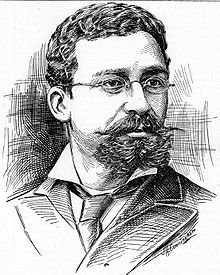
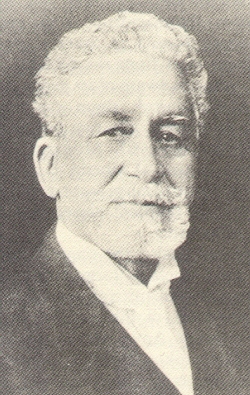
O PRIMEIRO NEGRO A SE FORMAR EM HARVARD


Richard Theodore Greener, a native of Philadelphia, became the first African American to graduate from Harvard College.  He later served the United States in diplomatic posts in India and Russia.  Greener lived in Boston and Cambridge as a child and entered Harvard in 1865 and received an A.B. degree from the institution in 1870.  After graduation he was appointed principal of the Male Department at Philadelphia’s Institute for Colored Youth which later became Cheyney University.  Three years later Greener became professor of Mental and Moral Philosophy at the University of South Carolina where he also served as librarian and taught Greek, Mathematics and Constitutional Law.  While there Greener entered the Law School and received an LL.B degree in 1876.
Active in the Republican Party, Greener was appointed United States Consul at Bombay, India in 1898 by President William McKinley.  Later that year he was transferred to Vladivostok, Russia, where he served as commercial agent until 1905.  During his term Greener reported to Washington on the construction of the Tran Siberian Railroad, the rapid growth of the European Russian population in the region, the status of the local Jewish population, and the local impact of China’s Boxer Rebellion in 1900. Recognizing Siberia’s growing importance to United States economic interests, Greener called unsuccessfully for the U.S. State Department to establish a consul-general in Vladivostok.  During the Russo-Japanese War of 1904-05 Greener supervised the evacuation of the Japanese from Sakhalin Island.  In October, 1905 Greener was recalled from Vladivostok.  He retired to Chicago the following year and died there in 1922. 


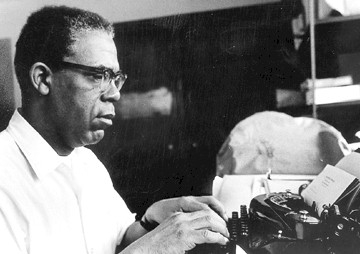
BIbliotecário poeta ou Poeta bibliotecário


Dudley Randall (January 14, 1914 - August 5, 2000) was an African American poet and poetry publisher from Detroit, Michigan. He founded a publishing company called Broadside Press in 1965, which published many leading African American writers. Randall's most famous poem is "The Ballad of Birmingham", written during the 1960s, about the 1963 bombing of the church Martin Luther King, Jr. belonged to in Birmingham, Alabama. Randall's poetry is characterized by simplicity and realism.
Randall was born on January 14, 1914 in Washington D.C. He was the son of Arthur George Clyde (a Congressional Minister) and Ada Viola (a teacher) Randall. His family moved to Detroit from Washington D.C. in 1920. He married Ruby Hudson in 1935. Then later he married to Mildred Pinckney in 1942, but this marriage dissolved too. In 1957, he married Vivian Spencer.
He developed an interest in poetry during his school years. At the age of thirteen, his very first published poem appeared in the Detroit Free Press. He worked in a foundry of the Ford Motor Company in Dearborn, Michigan from 1932 to 1937. He then worked as a clerk at a Post Office in Detroit from 1938 to 1943. He also served in military during World War II. He was working at a post office while he was attending Wayne State University in Detroit. He earned a Bachelor of Arts degree in English in 1949 from there. He completed his Master’s degree in Library Science at the University of Michigan in 1951. He worked as a librarian at Lincoln University in Jefferson City, Missouri, then at Morgan State College in Baltimore, Maryland. Finally in 1956, he returned to Detroit worked at the Wayne County Federated Library System as head of the reference-inter loan department.
He wrote one of his famous poems, Ballad of Birmingham, in response to the 1963 bombing of a Baptist church in which four girls were killed. Randall established the Broadside Press in 1965. The first collection by the press was Poem Counterpoem (1966). He then published Cities Burning (1968) in response to a riot in Detroit. It was a group of thirteen poems. Another fourteen poems appeared in Love You in 1970, followed by More to Remember in 1971 and After the Killing in 1973. Some of his well-known works are: Ballad of Birmingham, A poet is not a Jukebox, Booker T. and W.E.B., and The Profile on the Pillow.
The composer, Hans Werner Henze, used the words of his poem, Roses and Revolutions, in his 1973 song cycle Voices.
He received a Poet Laureate of the City of Detroit in 1981 by Mayor Coleman Young. He died on August 5, 2000 in Southfield, Michigan.


MOÇA BRANCA E OS ALUNOS


Moça_Branca_e_os_Colégios
Enviado por blogmni. - Assista mais vídeos de comédia.

A PRIMEIRA NEGRA PRESIDENTE (A) DA ALA


http://www.blackpast.org/files/blackpast_images/Clara_Stanton_Jones.jpg


Clara Stanton Jones (born May 14, 1913) was the first African American president of American Library Association, serving from 1976 to 1977. She was also appointed the director of the Detroit Public Library (1970–1978), becoming the first African American director of a major city public library in the United States.

Biography

Early life

Clara Stanton Jones was born on May 14, 1913 in St. Louis, Missouri to a close-knit, Catholic family. Her future career and impact in library science almost seemed predestined as she frequented the library at an early age. Jones recalls that she was one of the smallest patrons at the public library near her grandmother's house; she was also among very few black children at that local library. Although Jones had very little interaction with librarians in her young years, she read what interested her and selected her own materials. Her mother, Etta J. Stanton, worked as a school teacher, lecturing at public school systems until her marriage; Since the law did not allow married women to teach in the public school system, she taught in Catholic parochial schools to help support her family, including Clara Jone's endeavor to attend college. Jones' father, Ralph Herbert Stanton, was a manager at the Standard Life Insurance Company. He eventually accepted a position with the Atlanta Life Insurance Company where he worked until his death. Jones grew up in a highly segregated St. Louis neighborhood, but she was not daunted by the assumed, implicit Jim Crow laws; she instead regarded her young life to be privileged with all her primary mentors being African American.

Education

Education and solidarity were heavily emphasized in Jones family; She obtained a well-rounded education even though the St. Louis public school system was completely segregated. She grew up in an entirely African-American world, with black role-models and mentors. In highschool, Jones aspired to become an elementary school teacher, even though her future salary would be slightly below white counterparts. This position would still provide a high standard of living for African Americans at that time because the income gap between white and black teachers was only slight. Jones was the first member of her family to graduate from college. St. Louis was highly segregated, but instead of attending the local, tuition-free teachers college that was designated for black students, Jones attended the Milwaukee State Teacher’s College in 1930; she was inspired by her older brothers’ stories of college life away from home at Marquette University in Milwaukee, Wisconsin. Jones was one of only six black students at the college. She transferred to Spelman College in Atlanta, Georgia, where she majored in English and History and decided to become a librarian instead of a teacher. The president Florence Reed caught notice of Jones' typing skills and offered her a position as a typist with the new Atlanta University Library; the librarians encouraged Jones to pursue a career in librarianship. She was highly receptive to their suggestions as she had already considered this career change. Jones remained in that position until her graduation; she received her Bachelors of Art in 1934 from Spelman and a degree in Library Science in 1938 from the University of Michigan, Ann Arbor.

Career in Library and Information Science

Jones began working in libraries the same year she completed her degree in Library Science. She said that at the beginning of 1938, she worked in libraries at Dillard University, New Orleans, and Southern University, Baton Rouge, Louisiana. Jones spent the remainder of her librarian career at the Detroit Public Library, retiring in 1978 as the director. She was elected the first black president of the American Library Association after she accepted the position as head of the Detroit Public Library.

The Censorship of Racist and Sexist Library Materials
In May 1977, Clara Stanton Jones, acting as president of the American Library Association, responded to the ALA Intellectual Freedom Committee’s (IFC) recommendation to quash the ALA’s “Resolution on Racism and Sexism Awareness” because its language remained unclear. Her response was published in the American Libraries, the official publication of the ALA. Jones opposed the IFC’s proposal, declaring that the resolution required further adjustments and amendments to the language before the committee considers annulment. The IFC feared that the resolution favored censorship as a means to purge library materials of racist and sexist language, and thereby opposing the Library Bill of Rights pledge to sustain access to information and enlightenment despite content, and encourage libraries to challenge censorship.
The ALA made the decision to deliberate the fate of the resolution and report its results at the 1977 Detroit conference. Jones asserted that the resolution did not conflict with the Library Bill of Rights, and instead promoted awareness by encouraging training and outreach programs in the libraries and library schools. In agreement with the Library Bill of Rights, she advocated for more enlightenment, not repression, to combat the effects of racism and sexism in library materials. Jones viewed the resolution as the framework, and not the final solution, for enabling librarians to confront issues that hampered “human freedom”.
“The spirit of the “Resolution on Racism and Sexism Awareness” is not burdened with repression; it is liberating. If the resolution is imperfect, try to make it perfect, but not by destroying it first!” - Clara Stanton Jones.

 Major Achievements

Jones served as the director for Detroit Public Library from 1970 to 1978, becoming the first African American to head a major public library in the United States.
She served as the first black president of the American Library Association in 1976 to 1977. During her presidency, she heavily aided the ALA adoption of a "Resolution on Racism and Sexism Awareness" to encourage librarians to raise the awareness of library patrons and staff to problems of racism and sexism.
She advocated the passing of the "Resolution on Racism and Sexism Awareness" in 1977 despite the ALA's Intellectual Freedom Committee's recommendation to the ALA Executive Board that the resolution be rescinded.
President Jimi Carter appointed Jones as Commissioner to the National Commission on Libraries and Information Science in 1978. She served this post until 1982.
Jones received the Trailblazer Award in 1990 from the Black Caucus of the ALA, the highest award given by BCALA. The award recognizes individuals whose pioneering contributions have been outstanding and unique, and whose efforts have "blazed a trail" in the profession.


Professional Memberships

Jones founded the discussion group, Black Women Stirring the Waters
Black Caucus of the American Library Association
Social Responsibilities Round Table


Selected publications
Jones, C. S. (1974). Library service to the disadvantaged: Means and methods: a session from the 92nd Annual Conference of the American Library Association, Las Vegas, June 24–30, 1973. Phonotape. Development Digest.
Jones, C. (1977). ALA President Views the Racism/Sexism Resolution. American Libraries, 8(5), 244. Retrieved from Academic Search Premier database.
Josey, E. J., & Jones, C. S. (1978). The information society: Issues and answers : American Library Association's Presidential Commission for the 1977 Detroit Annual Conference. London: Oryx Press.
Dowlin, K. E., & Jones, C. S. (1987). How to computerize your community information and referral files. Ballwin, MO: ACTS.
Hernandez, E., Smith, E. M., & Jones, C. S. (1988). Librarians as colleagues across racial lines Strategies for action. Ballwin, Mo: ACTS.
Jones, C. S. (1992). From grassroots Outreach makes it happen. Chicago, Ill.: American Library Association.


Noteworthy Quotations

"Libraries were a part of my life from the very beginning."
"Librarians organize knowledge, information of any kind. We can make it accessible to people."
"Dr. DuBois would say, "Clara, what are you reading now, and what do you think of it?(of something that he had recommended). He really was very inspiring to me."
"When ALA first asked me if I would run for president, I said, "That's the last thing in the world I want to do, conduct a Council meeting with everybody shouting, "Point of order!""
"I really felt in touch with the people in our own race who were the achievers. They came through to us as real people."
"It never dawned on me to doubt my ability as far as race was concerned."



TODO PODEROSO MAZEMBE


Do Le Monde: Mazembe é o orgulho do futebol africano


les-corbeaux-du-tp-mazembe-revent-du-titre
Artigo publicado no Le Monde no dia 16.12.10
lemondefr_pet
Tradução: Xico Malta
Presidente, governador e bilionário. Uma política esportiva inteligente e uma dica de sucesso: Eis a receita que permitiu o clube congolês o Todo Poderoso Mazembe Lubumbashi de ser o primeiro clube africano a disputar a final do Mundial de clubes no sábado contra a Inter de Milão.
Se pela primeira vez não haverá uma final entre Europa e America do Sul, o responsável por isso é o senhor Moise Katumbi Chapwe, presidente do TP Mazembe (os corvos, em Kiswahili). Se fomos procurar uma analogia com algum dirigente dos grandes clubes da Europa, Katumbi seria uma espécie de Silvio Berlusconi (porém menos diabólico), primeiro Ministro da Itália e proprietário do Milan.
Filho de um judeu sefardita que fugiu da Europa nazista e de uma congolesa. Katumbi fez fortuna na pesca, nos transportes e depois nas minas de cobre e cobalto do Katanga, antes de ser triunfalmente eleito governador desta província da Republica Democrática do Congo, em 2007.
Ele investiu consideravelmente no TP Mazembe, o qual ele preside desde o fim dos anos 1990, prometendo desde o início conquistar o troféu da Liga dos Campeões da África.
Conquistou dois (2009 e 2010), trazendo de volta o brilho aos alvinegros, campeões da Copa Africana em 1967 e 1968. Ele está prestes a passar por uma extraordinária proeza: Se tornar campeão mundial de clubes!
O sucesso do TP Mazembe se deve a uma politica muito bem dosada. Katumbi conseguiu segurar alguns bons jogadores que poderiam muito bem estar em algum time da primeira divisão de um campeonato europeu. Ele paga os melhores salários da África (16.000 euros por mes, mais alguns bónus generosos), depositando-os em dia, o que não é bem comum no futebol africano.
A chegada na final em Abu Dabi demonstra que o projeto esportivo vendido aos jogadores para que eles permanecessem no clube não foi em vão. Eles terão a oportunidade de fazerem seus nomes brilharem em uma grande equipe africana ao invés de partirem ainda jovens para um pequeno clube europeu.
O craque do time é o congolês Trésor Mputo, todavia não participou da Copa por estar suspenso por um ano pela FIFA. Motivo: agrediu um arbitro. Na sua ausência, Given Singuluma da Zâmbia ou o congolês Kaluyituka Dioko, autor do segundo gol contra o Internacional , assumem a responsabilidade de conduzir o time à vitória.
O meia direita Narcisse Ekanga dos Camarões, o capitão Pamphile Mihayo ou o goleiro Kidiaba (34 anos) são os outros pilares do TP Mazembe.
Este último, que fez o jogo de sua vida contra os brasileiros, ficou também conhecido por causa de suas comemorações bem originais.
O treinador Lamine Ndiaye chegou em setembro e conseguiu arrumar a defesa que era o ponto fraco da equipe. O Senegalês está obviamente feliz pelo sucesso de seu projeto 100% africano. “Temos um cérebro, dois braços e duas pernas como todo mundo, afirmou o técnico. O futebol africano progrediu muito. Estamos no bom caminho e teremos resultados importantes em um futuro próximo”.
Já no sábado que vem, (hoje), ele poderá entrar no hall dos vencedores da Copa do Mundo da FIFA ao lado de Barcelona, Manchester United e São Paulo FC.

http://blogdobirner.virgula.uol.com.br/2010/12/18/do-le-monde-mazembe-e-o-orgulho-do-futebol-africano/

Fatos pouco conhecidos sobre bibliotecários negros

A idéia desse blog tem mais de dois anos a realização mais de um ano, justamente por não encontrar na internet esse assunto pesquisado e só recentemente descobri no Brasil (um tcc)  mas tb nos EUA em Indiana (uma compilação).
Gosto de saber que existem pessoas interessadas como eu sobre os bibliotecários negros e suas realizações e contribuições para a biblioteconomia !

Essa é a compilação que encontrei na internet.


Little Known Black Librarian Fact

Pesquisar este blog

O bibliotecário negro

Este blog tem como único objetivo colecionar materias da internet que tenha os bibliotecários negros e suas conquistas, bem como ações interessantes na divulgação da biblioteca.