Mostrando postagens com marcador bibliotecário. Mostrar todas as postagens

Pin up bibliotecária

https://blogger.googleusercontent.com/img/b/R29vZ2xl/AVvXsEjcjiSHM8qsjxQLuKKMfuxfxi9WPbTsH1DXwRo_biLH7vDdf8MYFi_5zGhOFnid9a8KAIZnuJqrAdZ4SHOQwaRNoyE8tjuOXl_ifX1juNlMNbfABYWaMhpymkBH45xsfJXjd-znx_BHFUUD/s400/librarian+ladder+pin+up.jpg

ENTRE A BIBLIOTECONOMIA E O TRABALHO SOCIAL


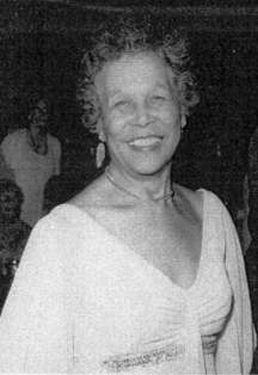
In choosing librarianship over teaching or social work, Effie Lee Morris combined her desire to help people with a personal passion for education.  In doing so she became one of America’s leading advocates for services to children, minorities, and the visually-impaired.  Born in Richmond, Virginia on April 20, 1921, Morris spent her youth in Cleveland, Ohio.  She received her Bachelor of Arts degree in 1945, Bachelor of Library Science in 1946, and Master's in Library Science in 1956 all from Western Reserve University (now Case Western Reserve University).  
Morris began work in 1946 at the Cleveland Public Library and established the first Negro History Week celebration for children there.  In 1955, she moved to New York as a children’s branch librarian in the Bronx.  Three years later, in 1958, she pioneered the development of library services for blind children.  She later served as president of the National Braille Club from 1961 to 1963.  
In 1963, Morris joined the San Francisco Public Library (SFPL) as its first children’s services coordinator.  A year later, she created the library’s Effie Lee Morris Historical and Research Collection for out-of-print children’s books, featuring titles that depict the changing portrayals of ethnic and minority groups during the 20th Century.  She remained at SFPL for 15 years and then served as editor of children's books at Harcourt Brace Jovanovich from 1978 to 1979.    
Active in the American Library Association (ALA) since 1949, Morris chaired the Social Responsibilities Round Table and was an early supporter and chairman of the Coretta Scott King Award in Children's Literature.  From 1971 to 1972 she was the first African American President of the Public Library Association.  In 2008, Morris was elected to honorary membership in the American Library Association, the organization’s highest honor, given to a living member of the Association who has made significant contributions to the field on librarianship. Morris was given the honorary membership “in recognition for her vision, advocacy and legacy to children’s services in public libraries.”  Effie Lee Morris died at her home in San Francisco in 2009. 


A PRIMEIRA NEGRA PRESIDENTE (A) DA ALA


http://www.blackpast.org/files/blackpast_images/Clara_Stanton_Jones.jpg


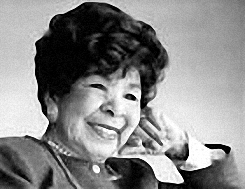
Clara Stanton Jones (born May 14, 1913) was the first African American president of American Library Association, serving from 1976 to 1977. She was also appointed the director of the Detroit Public Library (1970–1978), becoming the first African American director of a major city public library in the United States.

Biography

Early life

Clara Stanton Jones was born on May 14, 1913 in St. Louis, Missouri to a close-knit, Catholic family. Her future career and impact in library science almost seemed predestined as she frequented the library at an early age. Jones recalls that she was one of the smallest patrons at the public library near her grandmother's house; she was also among very few black children at that local library. Although Jones had very little interaction with librarians in her young years, she read what interested her and selected her own materials. Her mother, Etta J. Stanton, worked as a school teacher, lecturing at public school systems until her marriage; Since the law did not allow married women to teach in the public school system, she taught in Catholic parochial schools to help support her family, including Clara Jone's endeavor to attend college. Jones' father, Ralph Herbert Stanton, was a manager at the Standard Life Insurance Company. He eventually accepted a position with the Atlanta Life Insurance Company where he worked until his death. Jones grew up in a highly segregated St. Louis neighborhood, but she was not daunted by the assumed, implicit Jim Crow laws; she instead regarded her young life to be privileged with all her primary mentors being African American.

Education

Education and solidarity were heavily emphasized in Jones family; She obtained a well-rounded education even though the St. Louis public school system was completely segregated. She grew up in an entirely African-American world, with black role-models and mentors. In highschool, Jones aspired to become an elementary school teacher, even though her future salary would be slightly below white counterparts. This position would still provide a high standard of living for African Americans at that time because the income gap between white and black teachers was only slight. Jones was the first member of her family to graduate from college. St. Louis was highly segregated, but instead of attending the local, tuition-free teachers college that was designated for black students, Jones attended the Milwaukee State Teacher’s College in 1930; she was inspired by her older brothers’ stories of college life away from home at Marquette University in Milwaukee, Wisconsin. Jones was one of only six black students at the college. She transferred to Spelman College in Atlanta, Georgia, where she majored in English and History and decided to become a librarian instead of a teacher. The president Florence Reed caught notice of Jones' typing skills and offered her a position as a typist with the new Atlanta University Library; the librarians encouraged Jones to pursue a career in librarianship. She was highly receptive to their suggestions as she had already considered this career change. Jones remained in that position until her graduation; she received her Bachelors of Art in 1934 from Spelman and a degree in Library Science in 1938 from the University of Michigan, Ann Arbor.

Career in Library and Information Science

Jones began working in libraries the same year she completed her degree in Library Science. She said that at the beginning of 1938, she worked in libraries at Dillard University, New Orleans, and Southern University, Baton Rouge, Louisiana. Jones spent the remainder of her librarian career at the Detroit Public Library, retiring in 1978 as the director. She was elected the first black president of the American Library Association after she accepted the position as head of the Detroit Public Library.

The Censorship of Racist and Sexist Library Materials
In May 1977, Clara Stanton Jones, acting as president of the American Library Association, responded to the ALA Intellectual Freedom Committee’s (IFC) recommendation to quash the ALA’s “Resolution on Racism and Sexism Awareness” because its language remained unclear. Her response was published in the American Libraries, the official publication of the ALA. Jones opposed the IFC’s proposal, declaring that the resolution required further adjustments and amendments to the language before the committee considers annulment. The IFC feared that the resolution favored censorship as a means to purge library materials of racist and sexist language, and thereby opposing the Library Bill of Rights pledge to sustain access to information and enlightenment despite content, and encourage libraries to challenge censorship.
The ALA made the decision to deliberate the fate of the resolution and report its results at the 1977 Detroit conference. Jones asserted that the resolution did not conflict with the Library Bill of Rights, and instead promoted awareness by encouraging training and outreach programs in the libraries and library schools. In agreement with the Library Bill of Rights, she advocated for more enlightenment, not repression, to combat the effects of racism and sexism in library materials. Jones viewed the resolution as the framework, and not the final solution, for enabling librarians to confront issues that hampered “human freedom”.
“The spirit of the “Resolution on Racism and Sexism Awareness” is not burdened with repression; it is liberating. If the resolution is imperfect, try to make it perfect, but not by destroying it first!” - Clara Stanton Jones.

 Major Achievements

Jones served as the director for Detroit Public Library from 1970 to 1978, becoming the first African American to head a major public library in the United States.
She served as the first black president of the American Library Association in 1976 to 1977. During her presidency, she heavily aided the ALA adoption of a "Resolution on Racism and Sexism Awareness" to encourage librarians to raise the awareness of library patrons and staff to problems of racism and sexism.
She advocated the passing of the "Resolution on Racism and Sexism Awareness" in 1977 despite the ALA's Intellectual Freedom Committee's recommendation to the ALA Executive Board that the resolution be rescinded.
President Jimi Carter appointed Jones as Commissioner to the National Commission on Libraries and Information Science in 1978. She served this post until 1982.
Jones received the Trailblazer Award in 1990 from the Black Caucus of the ALA, the highest award given by BCALA. The award recognizes individuals whose pioneering contributions have been outstanding and unique, and whose efforts have "blazed a trail" in the profession.


Professional Memberships

Jones founded the discussion group, Black Women Stirring the Waters
Black Caucus of the American Library Association
Social Responsibilities Round Table


Selected publications
Jones, C. S. (1974). Library service to the disadvantaged: Means and methods: a session from the 92nd Annual Conference of the American Library Association, Las Vegas, June 24–30, 1973. Phonotape. Development Digest.
Jones, C. (1977). ALA President Views the Racism/Sexism Resolution. American Libraries, 8(5), 244. Retrieved from Academic Search Premier database.
Josey, E. J., & Jones, C. S. (1978). The information society: Issues and answers : American Library Association's Presidential Commission for the 1977 Detroit Annual Conference. London: Oryx Press.
Dowlin, K. E., & Jones, C. S. (1987). How to computerize your community information and referral files. Ballwin, MO: ACTS.
Hernandez, E., Smith, E. M., & Jones, C. S. (1988). Librarians as colleagues across racial lines Strategies for action. Ballwin, Mo: ACTS.
Jones, C. S. (1992). From grassroots Outreach makes it happen. Chicago, Ill.: American Library Association.


Noteworthy Quotations

"Libraries were a part of my life from the very beginning."
"Librarians organize knowledge, information of any kind. We can make it accessible to people."
"Dr. DuBois would say, "Clara, what are you reading now, and what do you think of it?(of something that he had recommended). He really was very inspiring to me."
"When ALA first asked me if I would run for president, I said, "That's the last thing in the world I want to do, conduct a Council meeting with everybody shouting, "Point of order!""
"I really felt in touch with the people in our own race who were the achievers. They came through to us as real people."
"It never dawned on me to doubt my ability as far as race was concerned."



AÇÕES DO MOVIMENTO NEGRO NO NORDESTE: UM OLHAR DOS ESTUDANTES DE BIBLIOTECONOMIA

Interessante saber que não só eu que tenho interesse em negritude e biblioteconomia !!!!
Parabéns ao pessoal  !!!!

AÇÕES DO MOVIMENTO NEGRO NO NORDESTE: UM OLHAR DOS  ESTUDANTES DE BIBLIOTECONOMIA

ACTS OF BLACK MOVEMENT IN THE NORTHEAST: A LOOK OF STUDENTS OF LIBRIANSHIP


Fonte: http://www.unirio.br/cch/eb/enebd/Comunicacao_Oral/eixo1/acoes_do_movimento.pdf

CONCURSO

Irei começar uma nova seção no blog, concursos. Mas não terá todos os concursos só concurso que considero que vale a pena seja pelo tipo de trabalho que se fará, seja (principalmente) pelo salário !!!!!!!


Vamos começar ....


CARGO 15: ANALISTA JUDICIÁRIO - ÁREA: APOIO ESPECIALIZADO - ESPECIALIDADE: BIBLIOTECONOMIA


REMUNERAÇÃO: R$ R$ 6.611,39.


Localidade de Vaga : Brasília/DF


Quantitativo de correções
                                                 Para ampla concorrência : 95

                                                 Para portadores de deficiência : 5


Conteúdo de biblioteconomia : 


Documentação e informação. 1.1 Conceito, finalidade, desenvolvimento e estrutura da documentação geral e jurídica. 1.2 Fontes institucionais: centros, serviços e sistemas de documentação. 1.3 Instrumentos da documentação: tipos de documentos. 1.4 Biblioteconomia e ciência da informação: conceitos básicos e finalidade. 1.5 Bibliotecário: legislação; ética profissional. 1.6 Controle bibliográfico dos registros de conhecimento. 2 Automação de serviços bibliotecários. 3 Organização e administração de bibliotecas. 3.1 Princípios básicos de organização e administração de biblioteca e funções administrativas em bibliotecas; estrutura organizacional. 3.2 Planejamento bibliográfico. 4 Organização e tratamento da informação. 5 Catalogação: AACR2 - Código de Catalogação Anglo-Americano (2.ª ed. revista): programas de entradas: autoria individual e múltipla, entidades coletivas, publicações periódicas, documentos legais (legislação e jurisprudência). 6 Classificação decimal universal (CDU): histórico e conceitos fundamentais; estrutura, sinais e símbolos utilizados na CDU; tabelas auxiliares; ordenação vertical e horizontal. 7 Linguagem documentária. 7.1 Técnicas de elaboração de tesauros, cabeçalho de assuntos, vocabulário controlado. 7.2 Instrumentos e métodos de controle terminológico. 7.3 Linguagem documentária utilizada na indexação. 8 Indexação. 8.1 Conceituação, fundamentos teóricos, características e funções. 8.2 Tipologia da indexação e dos índices. 8.3 Resumos: tipos e funções. 9 Normas técnicas. 9.1 Tipologia, funções, aplicabilidade. 9.2 Normas técnicas para a área de documentação: referência bibliográfica, resumos, abreviação de título de periódicos e publicações periódicas, sumário, preparação de índices de publicações, preparação de índices de publicações, preparação de guias de bibliotecas, centros de informação. 10 Formação e desenvolvimento de acervo. 11 Serviço de referência. 11.1 Atendimento a pesquisas e consultas; técnicas de busca; utilização de fontes gerais e jurídicas de informação; enciclopédias, dicionários, ementários, bibliografias e diretórios. 11.2 Estudos de usuários. 11.3 Serviço de referência: organização de serviços de notificação corrente (serviços de alerta), disseminação seletiva da informação (DSI): estratégia de busca de informação, planejamento e etapas de elaboração, atendimento ao usuário. 12 Informatização em unidades de informação. 12.1 Gestão de sistemas de informação. 13 Intercâmbio bibliográfico. 14 Serviços de alerta. 15 Bibliografia: conceituação, teorias, classificação, histórico e objetivos. 16 Marketing de biblioteca e centro de documentação: conceito, tipo e finalidade. 17 Gestão de serviços informacionais: luxo e processos de trabalho; controle e avaliação de serviços de informação. 18 Noção de gestão da informação e do conhecimento nas organizações.


 Forum para discussão


2011 Centenário do nascimento da bibliotecária Augusta Braxton Baker


Augusta Baker is one of those names that should be spelled out in dazzling lights in every single children's room in every single library in the United States. Storyteller, author, compiler, activist, and children's librarian, her influence on programming and collection development policies in public libraries cannot be underestimated. The stories in her collections (The Talking Tree, The Golden Lynx, etc.) are fine examples of "the tellable tale" and her book on storytelling (Storytelling: Art and Technique, with Ellin Greene) is arguably the most influential book on storytelling in libraries ever published.

Augusta Braxton Baker was an African-American librarian and storyteller, renowned for her contributions to children’s literature

Early life and education

Augusta Braxton Baker was born on April 1, 1911 in Baltimore, Maryland. Both of her parents were schoolteachers, who instilled in her a love of reading. During the day while her parents worked, her grandmother, Augusta Fax (from whom she received her name) cared for and told her stories. Baker delighted in these stories, carrying her love for them throughout her life. She learned to read before starting elementary school, later enrolling in the (racially segregated) black high school where her father taught, and graduating at the age of 16. Baker then entered the University of Pittsburgh, where she both met and married James Baker by the end of her sophomore year.
Relocating with her husband to New York, Baker sought to transfer to Albany Teacher’s College (now the State University of New York at Albany), only to be met with racial opposition from the college. It was then the wife of Franklin Roosevelt (who was then the Governor of New York), Eleanor, who was on the board of the Albany Interracial Council (now the Albany Urban League) and heavily advocated for Baker’s successful transfer. Though the college did not want to admit blacks, they also did not want to oppose the governor's wife, and Baker was admitted. She completed her education there, earning a B.A. in education in 1933 and in 1934 became the first African American to graduate from the college with a B.S. in library science.

Professional career

After graduation, Baker taught for a few years, until she was hired in 1937 as the children's librarian at the New York Public Library's 135th Street Branch (now the Countee Cullen Regional Branch) in Harlem.
In 1939, the branch began an effort to find and collect children's literature that portrayed black people as something other than "servile buffoons," speaking in a rude dialect, and other such stereotypes. This collection, founded by Baker as the James Weldon John Memorial Collection of Children's Books, led to the publication of the first of a number of bibliographies of books for and about black children. Baker furthered this project by encouraging authors, illustrators, and publishers to produce, as well as libraries to acquire, books depicting blacks in a favorable light.
In 1953, she was appointed Storytelling Specialist and Assistant Coordinator of Children's Services. Not long after that, she became Coordinator of Children's Services in 1961, becoming the first African-American librarian in an administrative position in the New York Public Library. In this role, she oversaw children's programs in the entire NYPL system and set policies for them. During this time, Baker also figured prominently in the American Library Association's Children's Services Division (now the Association for Library Service to Children), having served as its president. Additionally, she chaired the committee that awarded the Newbery Medal and the Caldecott Medal. Furthermore, Baker influenced many children's authors and illustrators—such as Maurice Sendak, Madeleine L'Engle, Ezra Jack Keats, and John Steptoe--while in this position. She also worked as a consultant for the then newly created children's television series Sesame Street.
In 1974, Baker retired from the New York Public Library. However, in 1980, she returned to librarianship to assume the newly created Storyteller-in-Residence position at the University of South Carolina; this was also the first such position in any American university at the time. She remained there until her second retirement in 1994. During her time there, Baker cowrote a book entitled Storytelling: Art and Technique with colleague Ellin Green, which was published in 1987.


Death and continued legacy

After a long illness, Baker died at the age of 86 on February 23, 1998. Her legacy has remained even today, particularly through the "A(ugusta) Baker’s Dozen: A Celebration of Stories" annual storytelling festival. Sponsored by the University of South Carolina College of Library and Information Science and the Richland County Public Library, this festival originated in 1987 during Baker’s time at the University, and is celebrated still to this day.[4]
Her legacy also continues through the Augusta Baker Collection of Children's Literature and Folklore at the University of South Carolina. The collection, donated by her son, James H. Baker III, contains over 1,600 children's books, including materials from her personal and working library, as well as papers, illustrations, and anthologies of folktales Baker used during her career.[5]


Awards and honors

  1. First recipient of the E.P. Dutton-John Macrae Award (1953)
  2. Parents Magazine Medal Award (1966)
  3. ALA Grolier Award (1968)
  4. Women's National Book Association, Constance Lindsay Skinner Award (1971)
  5. Clarence Day Award (1975)
  6. Honorary ALA Membership (1975)
  7. Honorary Doctorate from St. John's University (1980)
  8. Catholic Library Association's Regina Medal (1981)
  9. Honorary Doctorate from the University of South Carolina (1986)
  10. Second recipient of ALSC Distinguished Service Award (1993)


Bibliography


  1. From Janice M. Del Negor, former Editor of The Bulletin for Children's Books:
  2.  Baker, Augusta. 1955. Talking tree; fairy tales from 15 lands. Illus. by Johannes Troyer. Philadelphia, PA: J.B. Lippincott.
  3. Courlander, Harold. 1956. Uncle Bouqui, folk tales from Haiti; from Uncle Bouqui of Haiti. Read by Augusta Baker. Sound recording. Washington, DC: Folkways Records.
  4. Baker, Augusta. 1957. Books about Negro life for children. New York, NY: New York Public Library.
  5. Baker, Augusta, ed. 1960. Golden lynx, and other tales. Illus. by Johannes Troyer. Philadelphia, PA: J.B. Lippincott.
  6. Baker, Augusta, ed. 1960. Young years; best loved stories and poems for little children. New York, NY: Parents' Magazine Educational Press; Home Library Press.
  7. Baker, Augusta. 1961. Books about Negro life for children. New York, NY: New York Public Library.
  8. Baker, Augusta. 1963. Books about Negro life for children. New York, NY: New York Public Library.
  9. Baker, Augusta. 1963. Young years library. New York, NY: Parents' Magazine Educational Press.
  10. Baker, Augusta, et al. 1966. Come hither! : papers on children's literature and librarianship. Los Angeles, CA: Yeasayers Press.
  11. Baker, Augusta. 1967. Aids to choosing books for children. New York, NY: Children's Book Council.
  12. Rollins, Charlemae Hill. 1967. We build together; a reader's guide to Negro life and literature for elementary and high school use. With contributions from Augusta Baker, et al. Champaign, IL: National Council of Teachers of English.
  13. Baker, Augusta, ed. 1971. Black experience in children's books. Cover design by Ezra Jack Keats. New York, NY: New York Public Library.
  14. Baker, Augusta. 1975. Storytelling. Cassette recording. New York, Children's Book Council.
  15. Baker, Augusta and Ellin Greene. 1977. Storytelling : art and technique. New York, NY: R. R. Bowker.
  16. Baker, Augusta and Ellin Greene. 1987. Storytelling : art and technique, 2nd ed. New York, NY: R. R. Bowker.
  17. Green, Ellin. 1996. Storytelling : art and technique. With a foreword by Augusta Baker. New York, NY: R. R. Bowker.


http://en.wikipedia.org/wiki/Augusta_Braxton_Baker

http://www.blackscholarsindex.com/2010/03/augusta-baker-storyteller-librarian-authority-on-childrens-literature-and-legend/

http://kids.nypl.org/parents/ocs_centennial_baker.cfm


Como me apaixonei por uma bibliotecária e vivi para contar

Existe bibliotecários ? rs

Reverência ao Bibliotecário

Ok, sure. We've all got our little preconceived notions about who Librarians

ate and what they do. Many people think of Librarians as diminutive civil

servants, scuttling about "Sssh-ing" people stamping things.

Well, think again buster. Librarians have degrees.

They go to graduate school for information Science and become master

of data systems and Human-Computer Interaction. Librarians can

catalog anything from an onion to a dog's ear.

They could catalog you. Librarians wield unfathomable power.

With a flip of the wrist they can hide your dissertation behind piles

of old Field and Stream magazines. They can find data for your

term paper that you never knew existed. They may even point you

toward nem and appropriate subject headings.

People become Librarians because they know too much.

Their knowledge extends beyond mere categories.

They cannot be confined to disciplines. Librarians are all-knowing ans all-seeing.

They bring order to chaos.

They bring wisdom and culture to the masses.

They preserve every aspect of human knowledge. Librarians rule.

And they will kick the crap out of anyone who says otherwise.


http://librarianavengers.org/worship-2/

Meu coração pertence a um(a) bibliotecária(o)

http://www.cafepress.co.uk/

Serviço de referência - Cobrança de livros

Trajetória - TV USP - Johanna Smit


Trajetória" da TV USP com a participação de Johanna Smit , professora do departamento de Biblioteconomia e Documentação da Escola de Comunicações e Artes da Universidade de São Paulo.


O primeiro negro a ser presidente da ALA


Robert Wedgeworth became President of ProLiteracy Worldwide in August 2002 when Laubach Literacy International (LLI) and Literacy Volunteers of America, Inc. (LVA) merged. It is the largest non-governmental literacy training organization in the world. It publishes basic and advanced literacy training materials and provides literacy training through its affiliates across the U.S. and partner organizations in over 60 developing countries of Africa, Asia, Latin America and the Middle East. Its Headquarters in Syracuse, NY employs more than 100 staff.
Robert Wedgeworth served as University Librarian, Professor of Library Administration and Professor of Library and Information Science at the University of Illinois at Urbana-Champaign (UI) from November 1993 until August 20, 1999 when he retired from the University. The UI Library is the largest public university research library in the world and the third largest of all public and private university research libraries in North America after Harvard and Yale.
Prior to that Wedgeworth had been Dean of the School of Library Service, Columbia University from 1985-1992 and Executive Director of theAmerican Library Association (ALA)from 1972-1985.
After completing an A.B. at Wabash College, Crawfordsville, Indiana in 1959 and an M.S. in Library and Information Science at the University of Illinois in 1961, he worked in several libraries in Kansas City and St. Louis.
In 1962 the American Library Association selected Wedgeworth as one of 75 librarians to serve as staff for “Library 21,” a library of the future exhibit at the Seattle World’s Fair. This experience and additional data processing training at IBM led to his appointment as Assistant Chief Acquisitions Librarian at Brown University in July 1966, with a special assignment to introduce library automation to the Brown Libraries. From 1966 to 1969 he managed all domestic and foreign acquisitions of library materials at Brown while developing an automated acquisitions and fund accounting system. As a Council on Library Resources, Inc. Fellow he toured all of Western Europe studying the book trade during the summer of 1969.
Wedgeworth moved to the Graduate School of Library Service, Rutgers-The State University of New Jersey in the fall of 1969 to do advanced studies in librarianship and teach in the graduate program. He left Rutgers to become Executive Director of the American Library Association (ALA) in August 1972.
Assuming the leadership of ALA during a turbulent period of internal strife, he led the effort to democratize the Association and gave it new visibility and credibility nationally and internationally. Under his leadership the Association grew from 28,000 members to over 40,000. He developed a new Headquarters building in a joint venture that more than doubled the value of its property and produced a windfall profit of more than $10 million by 2003. With the demise of the National Book Committee, Wedgeworth negotiated with the publishing industry to bring the National Library Week program to the ALA. It quickly became a nationally visible marketing tool and the third major revenue source for the Association.
His interest in reading and literacy led to his involvement in the creation of the Friends of Libraries USA and to his initiative to organize the Coalition on Literacy in 1979. He then persuaded the Advertising Council to launch the first nationwide ad campaign promoting adult literacy.
In 1975 President Gerald R. Ford appointed Wedgeworth to the National Commission on New Uses of Copyrighted works (CONTU) where he was influential in the resolution of library photocopying issues that were key components of the Copyright Revision Law of 1978. From 1985 until 1992 he served as Dean of the School of Library Service, Columbia University.
At Illinois Wedgeworth reorganized the library faculty and transformed a 1970s university library, technologically, into a 1990s university library. Under his leadership Illinois launched a National Science Foundation sponsored digital library research program, expanded its Mortenson Center training program for foreign librarians and launched the web-based Kolb-Proust Research Archive to international acclaim. The UI Library also raised over $18 million in new endowments during his tenure, a record for a public university.
In his almost 40 years as a librarian, library educator and association executive, he has created and edited two major reference works, ALA YEARBOOK, 1976-1985 and the WORLD ENCYCLOPEDIA OF LIBRARY AND INFORMATION SERVICES, 3d edition 1993. In addition he has written and lectured widely on international librarianship, international book trade, and copyright and information policy and information technology. He has also conducted special studies of librarianship and the book trade in Western Europe, Latin America and South Africa. His publication, STARVATION OF YOUNG BLACK MINDS: THE EFFECTS OF THE BOOK BOYCOTTS IN SOUTH AFRICA, New York, 1989 written jointly with Lisa Drew raised serious questions about curbing the free flow of information during the struggle to combat apartheid. More recently, he produced a study of library development in South Africa, Botswana and Zimbabwe for the Carnegie Corporation of New York in 1998.
After six years on the Executive Board of the International Federation of Library Associations and Institutions (IFLA), he was elected President in 1991 and re-elected in 1995 to serve until 1997. He is the only the second American to be elected IFLA President and the only one to be elected to serve a second term. During his tenure as IFLA President he led the Association to become the dominant international library and information service organization in the world, expanding its membership to over 140 countries. He led the transformation of IFLA by introducing a global communications system (IFLANET) through the technical support of SilverPlatter and the National Library of Canada. From 1993 in Barcelona to 1997 in Copenhagen he presided over IFLA conferences that attracted record-breaking attendance to its programs and exhibits.
For his achievements Wedgeworth has received many honors and awards including five honorary doctorates, most recently from the College of William & Mary in 1988. In 1991 he was honored as the Most Distinguished Alumnus of the University of Illinois, Graduate School of Library and Information Science and in 1996 he received the Medal of Honor from the International Council of Archives for his international activities. From the American Library Association he has received three of its highest honors, the Lippincott and Melvil Dewey awards for professional leadership and, most recently, the Humphry/OCLC/Forest Press Award for achievements in international librarianship.
Currently, he serves as a member of the National Commission on Adult Literacy, he is a life member of the American Library Association, a life member of the National Association for the Advancement of Colored People (NAACP), a member of the Board of Trustees of Wabash College, the Board of Trustees of the Newberry Library and a member of the Grolier Society. Previously he has served on many boards and advisory committees including advisory committees to the Princeton, Miami, Stanford and Harvard University Libraries. He recently completely twelve years as a public member of the Accrediting Council for Journalism and Mass Communication and six years as an editorial adviser to the World Book Encyclopedia.
He and his wife, Chung-Kyun (C.K.), who is also a retired librarian, have one daughter who is an editor with the Los Angeles Times


Sadie Peterson Delaney pioneiro a trabalhar com Biblioterapia


Sadie Peterson Delaney (1889-1958) was the chief librarian of the Veterans Administration Hospital in Tuskegee, Alabama, for 34 years. She is well known as a pioneer for her work with bibliotherapy.

Biography


Sadie Peterson Delaney, daughter of Julia Frances Hawkins Johnson and James Johnson, was born on February 26, 1889, in Rochester, New York. She attended high school in Poughkeepsie, New York, and also spent one year at Miss McGovern’s School of Social Work. She attended college at the College of the City of New York, graduating in 1919. She went on to receive her library training at the New York Public Library School from 1920 to 1921. Delaney had one daughter named Grace with her first husband, Edward Louis Peterson. They divorced in 1921, and she married Rudicel A. Delaney in 1928. Delaney had a heart attack and died in Tuskegee, Alabama, on May 4, 1958.


Career

New York Public Library


Delaney continued her work at the New York Public Library after she completed her training. She worked at the 135th Street Branch in Harlem through 1923. She worked diligently to increase the programs available for children of different ethnic backgrounds. She ran story hours, discussion groups, and other events for children. Some of the events were geared specifically toward juvenile delinquents, foreign-born children or blind children. Her interest in working with blind children led her to learn Braille and Moon Code, a system of reading and writing for blind people. She also worked with parents and community adershelping them to see the value of the library for the children that they worked with at home or in community groups.

While at the New York Public Library, Delaney was integral in the development of an African American collection. She routinely met with African American authors, helping them to connect with other authors and publishers. She also established the first African American exhibit of art held in the New York Public Library.


Veterans Administration Hospital

Delaney was approached to head the library at the Veterans Administration Hospital in Tuskegee, Alabama. The hospital was home to physically disabled African American war veterans and veterans with mental or emotional issues. Delaney initially took a six-month leave of absence from the New York Public Library; however, she ended up staying in Tuskegee for the remainder of her career. When she arrived at the Veterans Administration Hospital in January 1924, there were just 200 books and a table in the library.


One of the first things Delaney did in Tuskegee was make the library more welcoming. She moved it into a larger room and added plants, wall hangings, flowers and other inviting elements. She wanted to have a positive impact on the patients in the hospital. She also began acquiring books for both the patients and the medical staff.


Within one year of Delaney’s arrival in Tuskegee, the library had 4,000 volumes available for patients and 85 volumes available in the medical library. Library circulation had risen to 1,000 books per month. By 1954, there were over 13,000 volumes in the patient library and over 3,000 volumes in the medical library. In addition to the chief librarian, there were six library assistants to help handle the demand for library resources.


Bibliotherapy


Delaney used bibliotherapy extensively in her work. She defined bibliotherapy as, “the treatment of patients through selected reading.” She was an advocate of giving the patients individual attention in order to learn their interests. She could use this knowledge to help pair them with books that would engage them. To help choose appropriate books for patients, Delaney would consult with the doctors and medical staff. She spoke of the value of having a librarian at medical meetings regarding patients. She also reviewed books, especially those that were written by or depicted African Americans. When choosing books for the library collection, Delaney took patient interests into consideration. She also tried to maintain information on current events and reference materials.


To complement her work with books and bibliotherapy, Delaney developed many special programs for the patients. She instituted book talks, monthly program meetings, a story hour and a variety of other clubs. She could share her own interests in some of the groups, such as the stamp and coin collecting clubs. She tried diligently to get all of the veterans involved with clubs and library activities. She ran a book cart program so that patients confined to their beds still had access to reading material. For those unable to hold a book, Delaney arranged for the books to be projected on the wall. The patient could turn the pages with a single button. She also sang familiar songs and read poetry to help the patients feel more relaxed.


She continued her work with the blind by teaching Braille at the hospital. As blind patients learned how to read Braille, some of them taught others. Delaney acquired talking books for the blind patients. They were also encouraged to join the clubs and programs that were run, giving them the same opportunities as the other patients.


In 1927, Delaney and the patients began broadcasting the library activities on the local radio station. The patients participated in book and art fairs, displaying their work and delivering talks about books. They were given numerous opportunities and choices for a creative outlet with the various activities available. Delaney also started the Disabled Veterans’ Literary Society, which received acclaim from the Veterans Administration.


Professional associations


Delaney was active in many professional associations. She served on the advisory board for the National Association for the Advancement of Colored People (NAACP) for five years. She was a member of the International Library Association and the American Library Association(ALA), where she served on the Council from 1946 to 1951. Delaney was elected councilor of the ALA Hospital Library Division in 1947. She was also a member of the Library of Congress Committee for Work with the Blind.


Delaney worked to join the Alabama Library Association, which did not allow African Americans into its membership at that time. She was eventually invited to join by the president of the Alabama Library Association; however, on April 15, 1951, when the next president took over, her dues were returned and her membership was discontinued. The Association suggested that she start an African American chapter, and Delaney balked at that idea. She cited examples of other professional organizations that had integrated, including library associations in other southern states. Delaney tried again to join the Alabama Library Association two years later, and was met with rejection again.


Awards and honors


Students from University of Illinois, University of North Carolina and Atlanta University were sent to observe and learn from Delaney at the Veterans Administration Hospital. Librarians from Europe, South Africa and around the United States also came to observe Delaney and her use of bibliotherapy. Her library was used as a model for other Veterans Administration hosiptals. She was invited to give speeches atAmerican universities, community churches and a conference in Rome in 1934.

In 1948, she was named Woman of the Year by the Iota Phi Lambda sorority. She received the same honor again in 1949 by the Zeta Phi Beta sorority, and then in 1950 by the National Urban League. Also in 1950, an honorary doctorate was bestowed upon her by Atlanta University.She was honored with a testimonial banquet at the 1950 American Library Association convention, and the US Veterans Administrationawarded her their top award for excellence in 1956.


Legacy


After Delaney’s death in 1958, the Atlanta University School of Library Science started a scholarshipin her name.
Delaney was inducted into the AlabamaLibrary Association’s

Named in her honor, The Sadie Peterson Delaney African Roots Library opened in Poughkeepsie, New York.

The New York Public Library has acquired and archived a large quantity of Delaney’s personal letters.

Delaney was recognized as one of the 100 most important leaders of the 20th century by American Libraries.


http://en.wikipedia.org/wiki/Sadie_Peterson_Delaney

A primeira mulher negra a conseguir o titulo em biblioteconomia nos EUA


Virginia Proctor Powell Florence (October 1, 1897 - 1991) was a trailblazer in both African-American history and the history of librarianship. In 1923 she became the second African-American to be formally trained in librarianship, after Edward Christopher Williams. However, she was still the first Black woman in the United States to earn a degree in library science.


Early life and education

Virginia Proctor Powell Florence was the only child born to Socrates Edward and Caroline Elizabeth (Proctor) Powell on October 1, 1897 in Wilkinsburg, Pennsylvania. Powell Florence spent her early years in Wilkinsburg until both her mother and father died in 1913. At this time Powell Florence moved to Pittsburgh to live with her aunt.
After moving to Pittsburgh Powell Florence graduated from Pittsburgh's Fifth Avenue High School in 1915. Next she followed in her mother's footsteps and continued her education at Oberlin College in Oberlin, Ohio. In 1919 Powell Florence earned her Bachelor of Arts degree in English literature from Oberlin and went out into the workforce. Eventually Powell Florence moved back to Pittsburgh where she was encouraged by, her future husband, Charles Wilbur Florence to pursue a career in librarianship.
During a time when African-Americans were rarely considered for admission into predominantly white universities Powell Florence was considered for admission into the Pittsburgh Carnegie Library School (now the University of Pittsburgh School of Information Sciences), There was much debate about allowing a black person into the program. School officials were concerned with how white students might react to having a black peer and the liklihood that Powell Florence would find work upon completion of the program was slim. No library in the Pittsburgh area had ever hired a black person with the amount of formal training Powell Florence wold have after graduation. After deliberation, school officials decided to admit Powell Florence in 1922 based on her previous academic achievement at Oberlin College.


Career

Although Powell Florence is recognized for her place in the history of librarianship, her first few careers did not lead her in that direction. Upon graduating from Oberlin, Powell Florence moved to St. Paul, Minnesota to work for the YWCA as a secretary in the Girl Reserves of the Colored Girls Work Section. After only a year, Powell Florence understood St. Paul was not for her and she returned to Pittsburgh.
Upon her return to Pittsburgh, Powell Florence realized that she wanted to become a teacher. While at Oberlin she was known to participate in community groups and campus literary clubs, and had a passion for working with children. Powell Florence thought the combination of her real world experience working with children at the YWCA and her degree in English literature would be more than adequate qualifications for her to become a teacher. Unfortunately, the Pittsburgh school system did not see her qualifications in the same light. The Pittsburgh school system had integrated but they were not yet ready for black teachers to impress knowledge upon white students and therefore would not accept Powell Florence as a teacher. To her dismay, she could not find a job that she desired so Powell Florence settled and worked in her aunt’s beauty salon for two years.
Not only was it apparent to Powell Florence that working in her aunt’s salon did not fit into her career goals but it was also apparent to Charles Wilbur Florence. He did not want to see Powell Florence lose sight of her goals and was her main advocate for her pursuit of a degree in librarianship. Florence knew that Powell Florence had the right combination of academic success, determination, and a love for children and books to be triumphant in the program at the Carnegie Library School. Due to his encouragement, Powell Florence applied for the program and subsequently got in, despite the apprehension about her race.
Following her graduation, Powell Florence applied to libraries across the country that seemed most likely to hire an African-American librarian. Powell Florence was hired into the New York Public Library system where she remained until 1927. After leaving the New York Public Library system, Powell Florence achieved yet another first: she became the first African-American to take and pass the New York high school librarian's examination. After completion of the test, Powell Florence was appointed librarian at Seward Park High School in Brooklyn.
On July 18, 1931, Virginia Proctor Powell and Charles Wilbur Florence were finally married. They had decided to delay marriage until this time to focus on their educations and careers. In addition to Mrs. Powell Florence’s success, Mr. Florence was quite accomplished himself. He earned undergraduate and graduate degrees from the University of Pittsburgh and spent two years at Harvard in a quest for a doctorate, however he did not complete the requirements. While in Boston, Florence was selected to become the president of Lincoln University of Missouri in Jefferson City, Missouri. After the wedding, the couple moved to Jefferson City so Florence could begin his appointment. Powell Florence took an eight year hiatus from librarianship to take on the role of “First Lady” of Lincoln University. In Missouri, she was described as a stylish, soft-spoken librarian fond of social teas and reading clubs.
In 1938 the couple moved again to follow another career opportunity for Florence, this time in Richmond, Virginia. Powell Florence was unable to find work for herself in Richmond and decided to take a position in Washington, D.C. away from her husband. The move to Washington, D.C. allowed Powell Florence to return to librarianship where she worked at Cordoza High School until 1945. Due to health complications Powell Florence stopped working in the Washington, D.C. school system and returned to Richmond.
Powell Florence’s health improved and allowed her to return to her career as a librarian. She worked in the Richmond school system at Maggie L. Walker Senior High School until 1965 when she retired from the field of librarianship.
Virginia Proctor Powell Florence died in 1991 at the age of 93 in Richmond.


Honors

Powell Florence’s contributions to librarianship were acknowledged decades after she became the first Black woman in the United States to earn a degree in library science. She was honored by the University of Pittsburgh in 1981 with a Special Award for Outstanding Professional Service and again posthumously in 2004 with a plaque in the lobby of the Information Sciences Building. Additionally the American Library Association recognized her endeavors by honoring Powell Florence in their list “100 of the most important leaders we had in the 20th century,” where she was ranked number 34.


O primeiro negro a obter PhD em biblioteconomia


Virginia Lacy Jones (June 25, 1912 - December 3, 1984) was a preeminent African-American librarian who throughout her 50-year career in the field pushed for the integration of public and academic libraries. A trailblazer of her time, she would go on to become one of the first African-Americans to earn their PhD in the Library Sciences field as well as becoming dean of Atlanta University's School of Library Sciences. And while her name might not be the first on people's minds when thinking of the landmark librarians of the past century, her history and work in the field of library science will prove that she deserves to be among the examples to follow for up and coming librarians.
Early Life
Virginia Lacy was born to Edward and Ellen Lacy in Cincinnati, Ohio on June 25, 1912. She spent much of her childhood in Clarksburg, West Virginia. She recalls that growing up her family was “poor, hardworking, proud, and ambitious.”  She says that books and reading were always a part of her home life. She and her mother would make frequent trips to the public library in Clarksburg, which was not segregated. In 1927, Jones left her family and moved to St. Louis, Missouri to live with an aunt and uncle . The move could have facilitated the path to a virtually expense-free college education through the Harris Teachers College, as she desperately wanted to further her education but her family was not able to afford it. She entered Sumner High School, where her uncle taught, and completed her final two years of school in 1929.
It was while in high school that Jones realized the possibility that librarianship would be a part of her future. It was an experience at the St. Louis Public Library that inspired her most. She was researching information for her church’s citywide essay contest on “The Values of Attending Sunday School” when she encountered a friendly reference librarian . She remembers that after telling this librarian what she was looking for, the librarian took her by the hand and showed her how to use the periodical indexes. Jones recalls, “This experience was a thrilling one for me, and my imagination ran wild at the magic of the St. Louis Public Library, a great storehouse of information, ideas, and inspiration. I thought that to be a librarian like that reference librarian who helped me in the St. Louis Public Library would be the greatest thing in the world.”

Education and Librarianship

After high school, Jones abandoned the idea of becoming a teacher and instead enrolled at the Hampton Institute in Hampton, Virginia; the only library school in the South where African-Americans could be trained. Here she met Florence Curtis. Curtis would play an integral role in Jones’ career. Curtis was the director of the library school and would become a mentor to Jones, who earned a B.S. in Library Science from Hampton in 1933. Later that same year, she found employment in Kentucky as the assistant librarian of Louisville Municipal College, which was the African-American branch of the segregated University of Louisville. She soon realized that a career in librarianship would require an advanced degree, but in order to do so she first had to complete a bachelor’s degree in education. Jones returned to the Hampton Institute and earned a B.S. in Social Studies Education in 1935.
At this time, a realization of the importance of training for African-American school librarians began. Florence Curtis proposed the establishment of regional centers to provide summer classes for these librarians and chose Jones to head the program at the Prairie View A&M College in Texas. Here courses were taught in reference, book selection, school library administration, and cataloging and classification.
In the fall of 1936, Jones returned to Louisville Municipal College as Head Librarian. . In addition to acting as Head Librarian, she also taught courses for African-American public and high school librarians who needed to earn college credit in order to be certified by the state. Now ready to begin her graduate education, Virginia Lacy Jones received a General Education Board fellowship upon recommendation from her mentor Florence Curtis, to attend the University of Illinois. Curtis strongly believed that Jones would be beneficial to library development for African-Americans in the South. In 1938, Jones completed a Master’s in Library Science. Upon completion of her Master’s degree, she returned once again to Louisville Municipal College as librarian and instructor. However, there had been a change in leadership while Jones was away, and when it became apparent that she could no longer tolerate the working environment Jones resigned .
The day following her resignation, Rufus Clement offered Jones a position as catalog librarian at Atlanta University. She had known Clement from Louisville Municipal College where he had been president. Clement had recently accepted the position of president at Atlanta University, where he had plans to create a library school to replace the school at the Hampton Institute, which had closed its doors.
Leaving Kentucky for Atlanta, Jones found herself taking part in something very exciting. Her new position allowed her to participated in the planning of what would become the Atlanta University School of Library Service. She was sent to library schools throughout the Eastern United States to observe the various programs. The school opened in the fall of 1941. The purpose and commitment of the school was to not only train librarians, but to create leaders for the betterment of library services in the South in general, and for African-Americans in particular. Again Jones held dual positions within the university. She was catalog librarian as well as an instructor. It was also in the fall of 1941 that she married Edward Allen Jones, Professor of French and Chairman of the Foreign Languages Department at Morehouse College.
After she had been teaching for two years at Atlanta University, Virginia Lacy Jones was awarded a second fellowship provided by the General Education Board. This allowed Jones to attend the University of Chicago where, in 1945, she became the second African-American to earn a doctorate in Library Science. Her dissertation was on “The Problems of Negro Public High School Libraries in Selected Southern Cities.” 
She served on the faculty at the Atlanta University School of Library Service until she was appointed Dean in 1945. She was the second person to hold this position, the first being Eliza Atkins Gleason who was the first African-American to receive a doctorate in Library Science. Her tenure as Dean of the School of Library Service ran until 1981. During the 36 years Jones spent as Dean, the school trained some 1800 black librarians, which was more than any school in the country.
After her retirement, Virginia Lacy Jones was appointed the first director of the Robert W. Woodruff Library at the Atlanta University Center , a position she held from 1982-1983. During her professional career, Jones wrote on issues that concerned libraries in the South and those dealing with Library Science education for African-Americans. The Robert W. Woodruff Library now houses 18.5 linear feet of these papers, as well correspondences, personal letters, and photographs all pertaining to her life.

Honors and Awards

During her professional career, Virginia Lacy Jones received numerous awards and recognitions. In 1967, she was elected the first African-American president of the Association of American Library Schools. That same year President Lyndon B. Johnson appointed her to the President’s Advisory Committee on Library Research and Training Projects where she was responsible for the report on Childrens and Youth Services. In 1973, Jones was awarded the Melville Dewey Award by the American Library Association. She was the first African-American to receive this award and the Joseph E. Lippincott Award, which she was given in 1977. In 1976 she was elected to honorary membership in ALA. This is the association’s highest honor. Other awards given to Jones include: an honorary Doctor of Letters from the University of Michigan (1979), Beta Phi Mu (Library Science Honorary Society) Award (1980), and the Mary Rothrock Award (1980).


Pesquisar este blog

O bibliotecário negro

Este blog tem como único objetivo colecionar materias da internet que tenha os bibliotecários negros e suas conquistas, bem como ações interessantes na divulgação da biblioteca.