Mostrando postagens com marcador librarian. Mostrar todas as postagens
Mostrando postagens com marcador librarian. Mostrar todas as postagens
ENTRE A BIBLIOTECONOMIA E O TRABALHO SOCIAL
Postado por
Bibliotecario Negro
sábado, 26 de fevereiro de 2011
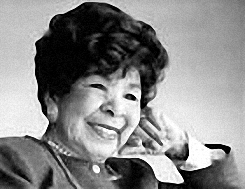
In choosing librarianship over teaching or social work, Effie Lee Morris combined her desire to help people with a personal passion for education. In doing so she became one of America’s leading advocates for services to children, minorities, and the visually-impaired. Born in Richmond, Virginia on April 20, 1921, Morris spent her youth in Cleveland, Ohio. She received her Bachelor of Arts degree in 1945, Bachelor of Library Science in 1946, and Master's in Library Science in 1956 all from Western Reserve University (now Case Western Reserve University).
Morris began work in 1946 at the Cleveland Public Library and established the first Negro History Week celebration for children there. In 1955, she moved to New York as a children’s branch librarian in the Bronx. Three years later, in 1958, she pioneered the development of library services for blind children. She later served as president of the National Braille Club from 1961 to 1963.
In 1963, Morris joined the San Francisco Public Library (SFPL) as its first children’s services coordinator. A year later, she created the library’s Effie Lee Morris Historical and Research Collection for out-of-print children’s books, featuring titles that depict the changing portrayals of ethnic and minority groups during the 20th Century. She remained at SFPL for 15 years and then served as editor of children's books at Harcourt Brace Jovanovich from 1978 to 1979.
Active in the American Library Association (ALA) since 1949, Morris chaired the Social Responsibilities Round Table and was an early supporter and chairman of the Coretta Scott King Award in Children's Literature. From 1971 to 1972 she was the first African American President of the Public Library Association. In 2008, Morris was elected to honorary membership in the American Library Association, the organization’s highest honor, given to a living member of the Association who has made significant contributions to the field on librarianship. Morris was given the honorary membership “in recognition for her vision, advocacy and legacy to children’s services in public libraries.” Effie Lee Morris died at her home in San Francisco in 2009.
A PRIMEIRA NEGRA PRESIDENTE (A) DA ALA
Postado por
Bibliotecario Negro
sábado, 22 de janeiro de 2011
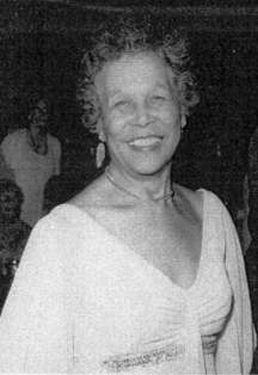
http://www.blackpast.org/files/blackpast_images/Clara_Stanton_Jones.jpg
Clara Stanton Jones (born May 14, 1913) was the first African American president of American Library Association, serving from 1976 to 1977. She was also appointed the director of the Detroit Public Library (1970–1978), becoming the first African American director of a major city public library in the United States.
Biography
Early life
Clara Stanton Jones was born on May 14, 1913 in St. Louis, Missouri to a close-knit, Catholic family. Her future career and impact in library science almost seemed predestined as she frequented the library at an early age. Jones recalls that she was one of the smallest patrons at the public library near her grandmother's house; she was also among very few black children at that local library. Although Jones had very little interaction with librarians in her young years, she read what interested her and selected her own materials. Her mother, Etta J. Stanton, worked as a school teacher, lecturing at public school systems until her marriage; Since the law did not allow married women to teach in the public school system, she taught in Catholic parochial schools to help support her family, including Clara Jone's endeavor to attend college. Jones' father, Ralph Herbert Stanton, was a manager at the Standard Life Insurance Company. He eventually accepted a position with the Atlanta Life Insurance Company where he worked until his death. Jones grew up in a highly segregated St. Louis neighborhood, but she was not daunted by the assumed, implicit Jim Crow laws; she instead regarded her young life to be privileged with all her primary mentors being African American.
Education and solidarity were heavily emphasized in Jones family; She obtained a well-rounded education even though the St. Louis public school system was completely segregated. She grew up in an entirely African-American world, with black role-models and mentors. In highschool, Jones aspired to become an elementary school teacher, even though her future salary would be slightly below white counterparts. This position would still provide a high standard of living for African Americans at that time because the income gap between white and black teachers was only slight. Jones was the first member of her family to graduate from college. St. Louis was highly segregated, but instead of attending the local, tuition-free teachers college that was designated for black students, Jones attended the Milwaukee State Teacher’s College in 1930; she was inspired by her older brothers’ stories of college life away from home at Marquette University in Milwaukee, Wisconsin. Jones was one of only six black students at the college. She transferred to Spelman College in Atlanta, Georgia, where she majored in English and History and decided to become a librarian instead of a teacher. The president Florence Reed caught notice of Jones' typing skills and offered her a position as a typist with the new Atlanta University Library; the librarians encouraged Jones to pursue a career in librarianship. She was highly receptive to their suggestions as she had already considered this career change. Jones remained in that position until her graduation; she received her Bachelors of Art in 1934 from Spelman and a degree in Library Science in 1938 from the University of Michigan, Ann Arbor.
Jones began working in libraries the same year she completed her degree in Library Science. She said that at the beginning of 1938, she worked in libraries at Dillard University, New Orleans, and Southern University, Baton Rouge, Louisiana. Jones spent the remainder of her librarian career at the Detroit Public Library, retiring in 1978 as the director. She was elected the first black president of the American Library Association after she accepted the position as head of the Detroit Public Library.
In May 1977, Clara Stanton Jones, acting as president of the American Library Association, responded to the ALA Intellectual Freedom Committee’s (IFC) recommendation to quash the ALA’s “Resolution on Racism and Sexism Awareness” because its language remained unclear. Her response was published in the American Libraries, the official publication of the ALA. Jones opposed the IFC’s proposal, declaring that the resolution required further adjustments and amendments to the language before the committee considers annulment. The IFC feared that the resolution favored censorship as a means to purge library materials of racist and sexist language, and thereby opposing the Library Bill of Rights pledge to sustain access to information and enlightenment despite content, and encourage libraries to challenge censorship.
The ALA made the decision to deliberate the fate of the resolution and report its results at the 1977 Detroit conference. Jones asserted that the resolution did not conflict with the Library Bill of Rights, and instead promoted awareness by encouraging training and outreach programs in the libraries and library schools. In agreement with the Library Bill of Rights, she advocated for more enlightenment, not repression, to combat the effects of racism and sexism in library materials. Jones viewed the resolution as the framework, and not the final solution, for enabling librarians to confront issues that hampered “human freedom”.
“The spirit of the “Resolution on Racism and Sexism Awareness” is not burdened with repression; it is liberating. If the resolution is imperfect, try to make it perfect, but not by destroying it first!” - Clara Stanton Jones.
Jones served as the director for Detroit Public Library from 1970 to 1978, becoming the first African American to head a major public library in the United States.
She served as the first black president of the American Library Association in 1976 to 1977. During her presidency, she heavily aided the ALA adoption of a "Resolution on Racism and Sexism Awareness" to encourage librarians to raise the awareness of library patrons and staff to problems of racism and sexism.
She advocated the passing of the "Resolution on Racism and Sexism Awareness" in 1977 despite the ALA's Intellectual Freedom Committee's recommendation to the ALA Executive Board that the resolution be rescinded.
President Jimi Carter appointed Jones as Commissioner to the National Commission on Libraries and Information Science in 1978. She served this post until 1982.
Jones received the Trailblazer Award in 1990 from the Black Caucus of the ALA, the highest award given by BCALA. The award recognizes individuals whose pioneering contributions have been outstanding and unique, and whose efforts have "blazed a trail" in the profession.
Jones founded the discussion group, Black Women Stirring the Waters
Black Caucus of the American Library Association
Social Responsibilities Round Table
Jones, C. S. (1974). Library service to the disadvantaged: Means and methods: a session from the 92nd Annual Conference of the American Library Association, Las Vegas, June 24–30, 1973. Phonotape. Development Digest.
Jones, C. (1977). ALA President Views the Racism/Sexism Resolution. American Libraries, 8(5), 244. Retrieved from Academic Search Premier database.
Josey, E. J., & Jones, C. S. (1978). The information society: Issues and answers : American Library Association's Presidential Commission for the 1977 Detroit Annual Conference. London: Oryx Press.
Dowlin, K. E., & Jones, C. S. (1987). How to computerize your community information and referral files. Ballwin, MO: ACTS.
Hernandez, E., Smith, E. M., & Jones, C. S. (1988). Librarians as colleagues across racial lines Strategies for action. Ballwin, Mo: ACTS.
Jones, C. S. (1992). From grassroots Outreach makes it happen. Chicago, Ill.: American Library Association.
Noteworthy Quotations
"Libraries were a part of my life from the very beginning."
"Librarians organize knowledge, information of any kind. We can make it accessible to people."
"Dr. DuBois would say, "Clara, what are you reading now, and what do you think of it?(of something that he had recommended). He really was very inspiring to me."
"When ALA first asked me if I would run for president, I said, "That's the last thing in the world I want to do, conduct a Council meeting with everybody shouting, "Point of order!""
"I really felt in touch with the people in our own race who were the achievers. They came through to us as real people."
"It never dawned on me to doubt my ability as far as race was concerned."
AÇÕES DO MOVIMENTO NEGRO NO NORDESTE: UM OLHAR DOS ESTUDANTES DE BIBLIOTECONOMIA
Postado por
Bibliotecario Negro
sábado, 4 de dezembro de 2010
Interessante saber que não só eu que tenho interesse em negritude e biblioteconomia !!!!
Parabéns ao pessoal !!!!
AÇÕES DO MOVIMENTO NEGRO NO NORDESTE: UM OLHAR DOS ESTUDANTES DE BIBLIOTECONOMIA
ACTS OF BLACK MOVEMENT IN THE NORTHEAST: A LOOK OF STUDENTS OF LIBRIANSHIP
Fonte: http://www.unirio.br/cch/eb/enebd/Comunicacao_Oral/eixo1/acoes_do_movimento.pdf
Poeta, autor, antologista e ... bibliotecário
Postado por
Bibliotecario Negro
domingo, 28 de novembro de 2010

Arna Wendell Bontemps |
Arna Bontemps - a noted Black poet, author, anthologist, librarian - was born in Alexandria, Louisiana on October 13, 1902. He was baptized at St. Francis Xavier Cathedral. Arna, son of Paul Bismark and Marie Pembrooke Bontemps, lived in a typical turn-of-the-century, middle class, wood-frame house at the corner of Ninth and Winn Streets. As a youth he moved with his family to California as a part of the great migration of that period. Arna attended public schools and graduated at age 17 from Pacific Union College (PUC). He completed his degree in three years. While in college, Bontemps became interested in writing. He wrote poetry, essays, short stories, fiction, non-fiction, and children’s books. Arna Bontemps was also a teacher in a private academy in New York City. He received professional training in librarianship at the Graduate School at the University of Chicago and served as the librarian at Fisk University in Nashville, Tennessee. He and his wife had six children. Bontemps' writings were greatly influenced by his memories of Alexandria, his cultural and social roots. As an adult, he returned to the South because of certain changes he observed as "Jim Crow" laws were being eradicated. Bontemps would later write in his novel, Black Thunder, "Time is not a river. Time is a pendulum...intricate patterns of recurrence in...experience and in...history". Bontemps is credited with writing over 20 books, plays, and anthologies and was considered the leading authority on the Harlem Renaissance. He was part of a core of young Black writers who led the "New Negro" movement. Bontemps wanted a front row seat to view and participate in the stirrings of jazz, theater and literature taking place in Harlem. His scholarly interest in fostering a new appraisal of his race and reevaluation of the Black man's place in American history is just a part of his legacy. His children's books are unique and his poetry and writings convey the rhythms and richness of the African American culture which was to influence a number of writers who followed him. (Edwin Blair. "Literary Habitats." Preservation in Print. September 1996.) The recent resurgence of interest in Bontemps' unpublished children's stories by Oxford University Press speaks to his universal appeal. The 1996 Academy Award nominated short film, "A Tuesday Morning Ride," is an adaptation of Bontemps' 1933 short story, "A Summer Tragedy". The revival of his play, "St. Louis Woman," written with Countee Cullen and adapted from Bontemps' first novel God Sends Sunday, gives further credence to his literary genius. When Arna Bontemps addressed the end of cultural colonialism, he wrote of the Harlem Renaissance writers and of their counterpart, the "lost generation": "Once they find a (united) voice, they will bring a fresh and fierce sense of reality to their vision of human life.... What American literature needs at this moment is color, music, gusto...." (Harlem Renaissance Remembered) |
2011 Centenário do nascimento da bibliotecária Augusta Braxton Baker
Postado por
Bibliotecario Negro


Augusta Baker is one of those names that should be spelled out in dazzling lights in every single children's room in every single library in the United States. Storyteller, author, compiler, activist, and children's librarian, her influence on programming and collection development policies in public libraries cannot be underestimated. The stories in her collections (The Talking Tree, The Golden Lynx, etc.) are fine examples of "the tellable tale" and her book on storytelling (Storytelling: Art and Technique, with Ellin Greene) is arguably the most influential book on storytelling in libraries ever published.
Augusta Braxton Baker was an African-American librarian and storyteller, renowned for her contributions to children’s literature
Early life and education
Augusta Braxton Baker was born on April 1, 1911 in Baltimore, Maryland. Both of her parents were schoolteachers, who instilled in her a love of reading. During the day while her parents worked, her grandmother, Augusta Fax (from whom she received her name) cared for and told her stories. Baker delighted in these stories, carrying her love for them throughout her life. She learned to read before starting elementary school, later enrolling in the (racially segregated) black high school where her father taught, and graduating at the age of 16. Baker then entered the University of Pittsburgh, where she both met and married James Baker by the end of her sophomore year.
Relocating with her husband to New York, Baker sought to transfer to Albany Teacher’s College (now the State University of New York at Albany), only to be met with racial opposition from the college. It was then the wife of Franklin Roosevelt (who was then the Governor of New York), Eleanor, who was on the board of the Albany Interracial Council (now the Albany Urban League) and heavily advocated for Baker’s successful transfer. Though the college did not want to admit blacks, they also did not want to oppose the governor's wife, and Baker was admitted. She completed her education there, earning a B.A. in education in 1933 and in 1934 became the first African American to graduate from the college with a B.S. in library science.
Professional career
After graduation, Baker taught for a few years, until she was hired in 1937 as the children's librarian at the New York Public Library's 135th Street Branch (now the Countee Cullen Regional Branch) in Harlem.
In 1939, the branch began an effort to find and collect children's literature that portrayed black people as something other than "servile buffoons," speaking in a rude dialect, and other such stereotypes. This collection, founded by Baker as the James Weldon John Memorial Collection of Children's Books, led to the publication of the first of a number of bibliographies of books for and about black children. Baker furthered this project by encouraging authors, illustrators, and publishers to produce, as well as libraries to acquire, books depicting blacks in a favorable light.
In 1953, she was appointed Storytelling Specialist and Assistant Coordinator of Children's Services. Not long after that, she became Coordinator of Children's Services in 1961, becoming the first African-American librarian in an administrative position in the New York Public Library. In this role, she oversaw children's programs in the entire NYPL system and set policies for them. During this time, Baker also figured prominently in the American Library Association's Children's Services Division (now the Association for Library Service to Children), having served as its president. Additionally, she chaired the committee that awarded the Newbery Medal and the Caldecott Medal. Furthermore, Baker influenced many children's authors and illustrators—such as Maurice Sendak, Madeleine L'Engle, Ezra Jack Keats, and John Steptoe--while in this position. She also worked as a consultant for the then newly created children's television series Sesame Street.
In 1974, Baker retired from the New York Public Library. However, in 1980, she returned to librarianship to assume the newly created Storyteller-in-Residence position at the University of South Carolina; this was also the first such position in any American university at the time. She remained there until her second retirement in 1994. During her time there, Baker cowrote a book entitled Storytelling: Art and Technique with colleague Ellin Green, which was published in 1987.
Death and continued legacy
After a long illness, Baker died at the age of 86 on February 23, 1998. Her legacy has remained even today, particularly through the "A(ugusta) Baker’s Dozen: A Celebration of Stories" annual storytelling festival. Sponsored by the University of South Carolina College of Library and Information Science and the Richland County Public Library, this festival originated in 1987 during Baker’s time at the University, and is celebrated still to this day.[4]
Her legacy also continues through the Augusta Baker Collection of Children's Literature and Folklore at the University of South Carolina. The collection, donated by her son, James H. Baker III, contains over 1,600 children's books, including materials from her personal and working library, as well as papers, illustrations, and anthologies of folktales Baker used during her career.[5]
Awards and honors
- First recipient of the E.P. Dutton-John Macrae Award (1953)
- Parents Magazine Medal Award (1966)
- ALA Grolier Award (1968)
- Women's National Book Association, Constance Lindsay Skinner Award (1971)
- Clarence Day Award (1975)
- Honorary ALA Membership (1975)
- Honorary Doctorate from St. John's University (1980)
- Catholic Library Association's Regina Medal (1981)
- Honorary Doctorate from the University of South Carolina (1986)
- Second recipient of ALSC Distinguished Service Award (1993)
Bibliography
- From Janice M. Del Negor, former Editor of The Bulletin for Children's Books:
- Baker, Augusta. 1955. Talking tree; fairy tales from 15 lands. Illus. by Johannes Troyer. Philadelphia, PA: J.B. Lippincott.
- Courlander, Harold. 1956. Uncle Bouqui, folk tales from Haiti; from Uncle Bouqui of Haiti. Read by Augusta Baker. Sound recording. Washington, DC: Folkways Records.
- Baker, Augusta. 1957. Books about Negro life for children. New York, NY: New York Public Library.
- Baker, Augusta, ed. 1960. Golden lynx, and other tales. Illus. by Johannes Troyer. Philadelphia, PA: J.B. Lippincott.
- Baker, Augusta, ed. 1960. Young years; best loved stories and poems for little children. New York, NY: Parents' Magazine Educational Press; Home Library Press.
- Baker, Augusta. 1961. Books about Negro life for children. New York, NY: New York Public Library.
- Baker, Augusta. 1963. Books about Negro life for children. New York, NY: New York Public Library.
- Baker, Augusta. 1963. Young years library. New York, NY: Parents' Magazine Educational Press.
- Baker, Augusta, et al. 1966. Come hither! : papers on children's literature and librarianship. Los Angeles, CA: Yeasayers Press.
- Baker, Augusta. 1967. Aids to choosing books for children. New York, NY: Children's Book Council.
- Rollins, Charlemae Hill. 1967. We build together; a reader's guide to Negro life and literature for elementary and high school use. With contributions from Augusta Baker, et al. Champaign, IL: National Council of Teachers of English.
- Baker, Augusta, ed. 1971. Black experience in children's books. Cover design by Ezra Jack Keats. New York, NY: New York Public Library.
- Baker, Augusta. 1975. Storytelling. Cassette recording. New York, Children's Book Council.
- Baker, Augusta and Ellin Greene. 1977. Storytelling : art and technique. New York, NY: R. R. Bowker.
- Baker, Augusta and Ellin Greene. 1987. Storytelling : art and technique, 2nd ed. New York, NY: R. R. Bowker.
- Green, Ellin. 1996. Storytelling : art and technique. With a foreword by Augusta Baker. New York, NY: R. R. Bowker.
http://en.wikipedia.org/wiki/Augusta_Braxton_Baker
http://www.blackscholarsindex.com/2010/03/augusta-baker-storyteller-librarian-authority-on-childrens-literature-and-legend/
http://kids.nypl.org/parents/ocs_centennial_baker.cfm
Como me apaixonei por uma bibliotecária e vivi para contar
Postado por
Bibliotecario Negro
quarta-feira, 24 de novembro de 2010


 Postagens

