Sadie Peterson Delaney pioneiro a trabalhar com Biblioterapia


Sadie Peterson Delaney (1889-1958) was the chief librarian of the Veterans Administration Hospital in Tuskegee, Alabama, for 34 years. She is well known as a pioneer for her work with bibliotherapy.

Biography


Sadie Peterson Delaney, daughter of Julia Frances Hawkins Johnson and James Johnson, was born on February 26, 1889, in Rochester, New York. She attended high school in Poughkeepsie, New York, and also spent one year at Miss McGovern’s School of Social Work. She attended college at the College of the City of New York, graduating in 1919. She went on to receive her library training at the New York Public Library School from 1920 to 1921. Delaney had one daughter named Grace with her first husband, Edward Louis Peterson. They divorced in 1921, and she married Rudicel A. Delaney in 1928. Delaney had a heart attack and died in Tuskegee, Alabama, on May 4, 1958.


Career

New York Public Library


Delaney continued her work at the New York Public Library after she completed her training. She worked at the 135th Street Branch in Harlem through 1923. She worked diligently to increase the programs available for children of different ethnic backgrounds. She ran story hours, discussion groups, and other events for children. Some of the events were geared specifically toward juvenile delinquents, foreign-born children or blind children. Her interest in working with blind children led her to learn Braille and Moon Code, a system of reading and writing for blind people. She also worked with parents and community adershelping them to see the value of the library for the children that they worked with at home or in community groups.

While at the New York Public Library, Delaney was integral in the development of an African American collection. She routinely met with African American authors, helping them to connect with other authors and publishers. She also established the first African American exhibit of art held in the New York Public Library.


Veterans Administration Hospital

Delaney was approached to head the library at the Veterans Administration Hospital in Tuskegee, Alabama. The hospital was home to physically disabled African American war veterans and veterans with mental or emotional issues. Delaney initially took a six-month leave of absence from the New York Public Library; however, she ended up staying in Tuskegee for the remainder of her career. When she arrived at the Veterans Administration Hospital in January 1924, there were just 200 books and a table in the library.


One of the first things Delaney did in Tuskegee was make the library more welcoming. She moved it into a larger room and added plants, wall hangings, flowers and other inviting elements. She wanted to have a positive impact on the patients in the hospital. She also began acquiring books for both the patients and the medical staff.


Within one year of Delaney’s arrival in Tuskegee, the library had 4,000 volumes available for patients and 85 volumes available in the medical library. Library circulation had risen to 1,000 books per month. By 1954, there were over 13,000 volumes in the patient library and over 3,000 volumes in the medical library. In addition to the chief librarian, there were six library assistants to help handle the demand for library resources.


Bibliotherapy


Delaney used bibliotherapy extensively in her work. She defined bibliotherapy as, “the treatment of patients through selected reading.” She was an advocate of giving the patients individual attention in order to learn their interests. She could use this knowledge to help pair them with books that would engage them. To help choose appropriate books for patients, Delaney would consult with the doctors and medical staff. She spoke of the value of having a librarian at medical meetings regarding patients. She also reviewed books, especially those that were written by or depicted African Americans. When choosing books for the library collection, Delaney took patient interests into consideration. She also tried to maintain information on current events and reference materials.


To complement her work with books and bibliotherapy, Delaney developed many special programs for the patients. She instituted book talks, monthly program meetings, a story hour and a variety of other clubs. She could share her own interests in some of the groups, such as the stamp and coin collecting clubs. She tried diligently to get all of the veterans involved with clubs and library activities. She ran a book cart program so that patients confined to their beds still had access to reading material. For those unable to hold a book, Delaney arranged for the books to be projected on the wall. The patient could turn the pages with a single button. She also sang familiar songs and read poetry to help the patients feel more relaxed.


She continued her work with the blind by teaching Braille at the hospital. As blind patients learned how to read Braille, some of them taught others. Delaney acquired talking books for the blind patients. They were also encouraged to join the clubs and programs that were run, giving them the same opportunities as the other patients.


In 1927, Delaney and the patients began broadcasting the library activities on the local radio station. The patients participated in book and art fairs, displaying their work and delivering talks about books. They were given numerous opportunities and choices for a creative outlet with the various activities available. Delaney also started the Disabled Veterans’ Literary Society, which received acclaim from the Veterans Administration.


Professional associations


Delaney was active in many professional associations. She served on the advisory board for the National Association for the Advancement of Colored People (NAACP) for five years. She was a member of the International Library Association and the American Library Association(ALA), where she served on the Council from 1946 to 1951. Delaney was elected councilor of the ALA Hospital Library Division in 1947. She was also a member of the Library of Congress Committee for Work with the Blind.


Delaney worked to join the Alabama Library Association, which did not allow African Americans into its membership at that time. She was eventually invited to join by the president of the Alabama Library Association; however, on April 15, 1951, when the next president took over, her dues were returned and her membership was discontinued. The Association suggested that she start an African American chapter, and Delaney balked at that idea. She cited examples of other professional organizations that had integrated, including library associations in other southern states. Delaney tried again to join the Alabama Library Association two years later, and was met with rejection again.


Awards and honors


Students from University of Illinois, University of North Carolina and Atlanta University were sent to observe and learn from Delaney at the Veterans Administration Hospital. Librarians from Europe, South Africa and around the United States also came to observe Delaney and her use of bibliotherapy. Her library was used as a model for other Veterans Administration hosiptals. She was invited to give speeches atAmerican universities, community churches and a conference in Rome in 1934.

In 1948, she was named Woman of the Year by the Iota Phi Lambda sorority. She received the same honor again in 1949 by the Zeta Phi Beta sorority, and then in 1950 by the National Urban League. Also in 1950, an honorary doctorate was bestowed upon her by Atlanta University.She was honored with a testimonial banquet at the 1950 American Library Association convention, and the US Veterans Administrationawarded her their top award for excellence in 1956.


Legacy


After Delaney’s death in 1958, the Atlanta University School of Library Science started a scholarshipin her name.
Delaney was inducted into the AlabamaLibrary Association’s

Named in her honor, The Sadie Peterson Delaney African Roots Library opened in Poughkeepsie, New York.

The New York Public Library has acquired and archived a large quantity of Delaney’s personal letters.

Delaney was recognized as one of the 100 most important leaders of the 20th century by American Libraries.


http://en.wikipedia.org/wiki/Sadie_Peterson_Delaney

A primeira mulher negra a conseguir o titulo em biblioteconomia nos EUA


Virginia Proctor Powell Florence (October 1, 1897 - 1991) was a trailblazer in both African-American history and the history of librarianship. In 1923 she became the second African-American to be formally trained in librarianship, after Edward Christopher Williams. However, she was still the first Black woman in the United States to earn a degree in library science.


Early life and education

Virginia Proctor Powell Florence was the only child born to Socrates Edward and Caroline Elizabeth (Proctor) Powell on October 1, 1897 in Wilkinsburg, Pennsylvania. Powell Florence spent her early years in Wilkinsburg until both her mother and father died in 1913. At this time Powell Florence moved to Pittsburgh to live with her aunt.
After moving to Pittsburgh Powell Florence graduated from Pittsburgh's Fifth Avenue High School in 1915. Next she followed in her mother's footsteps and continued her education at Oberlin College in Oberlin, Ohio. In 1919 Powell Florence earned her Bachelor of Arts degree in English literature from Oberlin and went out into the workforce. Eventually Powell Florence moved back to Pittsburgh where she was encouraged by, her future husband, Charles Wilbur Florence to pursue a career in librarianship.
During a time when African-Americans were rarely considered for admission into predominantly white universities Powell Florence was considered for admission into the Pittsburgh Carnegie Library School (now the University of Pittsburgh School of Information Sciences), There was much debate about allowing a black person into the program. School officials were concerned with how white students might react to having a black peer and the liklihood that Powell Florence would find work upon completion of the program was slim. No library in the Pittsburgh area had ever hired a black person with the amount of formal training Powell Florence wold have after graduation. After deliberation, school officials decided to admit Powell Florence in 1922 based on her previous academic achievement at Oberlin College.


Career

Although Powell Florence is recognized for her place in the history of librarianship, her first few careers did not lead her in that direction. Upon graduating from Oberlin, Powell Florence moved to St. Paul, Minnesota to work for the YWCA as a secretary in the Girl Reserves of the Colored Girls Work Section. After only a year, Powell Florence understood St. Paul was not for her and she returned to Pittsburgh.
Upon her return to Pittsburgh, Powell Florence realized that she wanted to become a teacher. While at Oberlin she was known to participate in community groups and campus literary clubs, and had a passion for working with children. Powell Florence thought the combination of her real world experience working with children at the YWCA and her degree in English literature would be more than adequate qualifications for her to become a teacher. Unfortunately, the Pittsburgh school system did not see her qualifications in the same light. The Pittsburgh school system had integrated but they were not yet ready for black teachers to impress knowledge upon white students and therefore would not accept Powell Florence as a teacher. To her dismay, she could not find a job that she desired so Powell Florence settled and worked in her aunt’s beauty salon for two years.
Not only was it apparent to Powell Florence that working in her aunt’s salon did not fit into her career goals but it was also apparent to Charles Wilbur Florence. He did not want to see Powell Florence lose sight of her goals and was her main advocate for her pursuit of a degree in librarianship. Florence knew that Powell Florence had the right combination of academic success, determination, and a love for children and books to be triumphant in the program at the Carnegie Library School. Due to his encouragement, Powell Florence applied for the program and subsequently got in, despite the apprehension about her race.
Following her graduation, Powell Florence applied to libraries across the country that seemed most likely to hire an African-American librarian. Powell Florence was hired into the New York Public Library system where she remained until 1927. After leaving the New York Public Library system, Powell Florence achieved yet another first: she became the first African-American to take and pass the New York high school librarian's examination. After completion of the test, Powell Florence was appointed librarian at Seward Park High School in Brooklyn.
On July 18, 1931, Virginia Proctor Powell and Charles Wilbur Florence were finally married. They had decided to delay marriage until this time to focus on their educations and careers. In addition to Mrs. Powell Florence’s success, Mr. Florence was quite accomplished himself. He earned undergraduate and graduate degrees from the University of Pittsburgh and spent two years at Harvard in a quest for a doctorate, however he did not complete the requirements. While in Boston, Florence was selected to become the president of Lincoln University of Missouri in Jefferson City, Missouri. After the wedding, the couple moved to Jefferson City so Florence could begin his appointment. Powell Florence took an eight year hiatus from librarianship to take on the role of “First Lady” of Lincoln University. In Missouri, she was described as a stylish, soft-spoken librarian fond of social teas and reading clubs.
In 1938 the couple moved again to follow another career opportunity for Florence, this time in Richmond, Virginia. Powell Florence was unable to find work for herself in Richmond and decided to take a position in Washington, D.C. away from her husband. The move to Washington, D.C. allowed Powell Florence to return to librarianship where she worked at Cordoza High School until 1945. Due to health complications Powell Florence stopped working in the Washington, D.C. school system and returned to Richmond.
Powell Florence’s health improved and allowed her to return to her career as a librarian. She worked in the Richmond school system at Maggie L. Walker Senior High School until 1965 when she retired from the field of librarianship.
Virginia Proctor Powell Florence died in 1991 at the age of 93 in Richmond.


Honors

Powell Florence’s contributions to librarianship were acknowledged decades after she became the first Black woman in the United States to earn a degree in library science. She was honored by the University of Pittsburgh in 1981 with a Special Award for Outstanding Professional Service and again posthumously in 2004 with a plaque in the lobby of the Information Sciences Building. Additionally the American Library Association recognized her endeavors by honoring Powell Florence in their list “100 of the most important leaders we had in the 20th century,” where she was ranked number 34.


O primeiro negro a obter PhD em biblioteconomia


Virginia Lacy Jones (June 25, 1912 - December 3, 1984) was a preeminent African-American librarian who throughout her 50-year career in the field pushed for the integration of public and academic libraries. A trailblazer of her time, she would go on to become one of the first African-Americans to earn their PhD in the Library Sciences field as well as becoming dean of Atlanta University's School of Library Sciences. And while her name might not be the first on people's minds when thinking of the landmark librarians of the past century, her history and work in the field of library science will prove that she deserves to be among the examples to follow for up and coming librarians.
Early Life
Virginia Lacy was born to Edward and Ellen Lacy in Cincinnati, Ohio on June 25, 1912. She spent much of her childhood in Clarksburg, West Virginia. She recalls that growing up her family was “poor, hardworking, proud, and ambitious.”  She says that books and reading were always a part of her home life. She and her mother would make frequent trips to the public library in Clarksburg, which was not segregated. In 1927, Jones left her family and moved to St. Louis, Missouri to live with an aunt and uncle . The move could have facilitated the path to a virtually expense-free college education through the Harris Teachers College, as she desperately wanted to further her education but her family was not able to afford it. She entered Sumner High School, where her uncle taught, and completed her final two years of school in 1929.
It was while in high school that Jones realized the possibility that librarianship would be a part of her future. It was an experience at the St. Louis Public Library that inspired her most. She was researching information for her church’s citywide essay contest on “The Values of Attending Sunday School” when she encountered a friendly reference librarian . She remembers that after telling this librarian what she was looking for, the librarian took her by the hand and showed her how to use the periodical indexes. Jones recalls, “This experience was a thrilling one for me, and my imagination ran wild at the magic of the St. Louis Public Library, a great storehouse of information, ideas, and inspiration. I thought that to be a librarian like that reference librarian who helped me in the St. Louis Public Library would be the greatest thing in the world.”

Education and Librarianship

After high school, Jones abandoned the idea of becoming a teacher and instead enrolled at the Hampton Institute in Hampton, Virginia; the only library school in the South where African-Americans could be trained. Here she met Florence Curtis. Curtis would play an integral role in Jones’ career. Curtis was the director of the library school and would become a mentor to Jones, who earned a B.S. in Library Science from Hampton in 1933. Later that same year, she found employment in Kentucky as the assistant librarian of Louisville Municipal College, which was the African-American branch of the segregated University of Louisville. She soon realized that a career in librarianship would require an advanced degree, but in order to do so she first had to complete a bachelor’s degree in education. Jones returned to the Hampton Institute and earned a B.S. in Social Studies Education in 1935.
At this time, a realization of the importance of training for African-American school librarians began. Florence Curtis proposed the establishment of regional centers to provide summer classes for these librarians and chose Jones to head the program at the Prairie View A&M College in Texas. Here courses were taught in reference, book selection, school library administration, and cataloging and classification.
In the fall of 1936, Jones returned to Louisville Municipal College as Head Librarian. . In addition to acting as Head Librarian, she also taught courses for African-American public and high school librarians who needed to earn college credit in order to be certified by the state. Now ready to begin her graduate education, Virginia Lacy Jones received a General Education Board fellowship upon recommendation from her mentor Florence Curtis, to attend the University of Illinois. Curtis strongly believed that Jones would be beneficial to library development for African-Americans in the South. In 1938, Jones completed a Master’s in Library Science. Upon completion of her Master’s degree, she returned once again to Louisville Municipal College as librarian and instructor. However, there had been a change in leadership while Jones was away, and when it became apparent that she could no longer tolerate the working environment Jones resigned .
The day following her resignation, Rufus Clement offered Jones a position as catalog librarian at Atlanta University. She had known Clement from Louisville Municipal College where he had been president. Clement had recently accepted the position of president at Atlanta University, where he had plans to create a library school to replace the school at the Hampton Institute, which had closed its doors.
Leaving Kentucky for Atlanta, Jones found herself taking part in something very exciting. Her new position allowed her to participated in the planning of what would become the Atlanta University School of Library Service. She was sent to library schools throughout the Eastern United States to observe the various programs. The school opened in the fall of 1941. The purpose and commitment of the school was to not only train librarians, but to create leaders for the betterment of library services in the South in general, and for African-Americans in particular. Again Jones held dual positions within the university. She was catalog librarian as well as an instructor. It was also in the fall of 1941 that she married Edward Allen Jones, Professor of French and Chairman of the Foreign Languages Department at Morehouse College.
After she had been teaching for two years at Atlanta University, Virginia Lacy Jones was awarded a second fellowship provided by the General Education Board. This allowed Jones to attend the University of Chicago where, in 1945, she became the second African-American to earn a doctorate in Library Science. Her dissertation was on “The Problems of Negro Public High School Libraries in Selected Southern Cities.” 
She served on the faculty at the Atlanta University School of Library Service until she was appointed Dean in 1945. She was the second person to hold this position, the first being Eliza Atkins Gleason who was the first African-American to receive a doctorate in Library Science. Her tenure as Dean of the School of Library Service ran until 1981. During the 36 years Jones spent as Dean, the school trained some 1800 black librarians, which was more than any school in the country.
After her retirement, Virginia Lacy Jones was appointed the first director of the Robert W. Woodruff Library at the Atlanta University Center , a position she held from 1982-1983. During her professional career, Jones wrote on issues that concerned libraries in the South and those dealing with Library Science education for African-Americans. The Robert W. Woodruff Library now houses 18.5 linear feet of these papers, as well correspondences, personal letters, and photographs all pertaining to her life.

Honors and Awards

During her professional career, Virginia Lacy Jones received numerous awards and recognitions. In 1967, she was elected the first African-American president of the Association of American Library Schools. That same year President Lyndon B. Johnson appointed her to the President’s Advisory Committee on Library Research and Training Projects where she was responsible for the report on Childrens and Youth Services. In 1973, Jones was awarded the Melville Dewey Award by the American Library Association. She was the first African-American to receive this award and the Joseph E. Lippincott Award, which she was given in 1977. In 1976 she was elected to honorary membership in ALA. This is the association’s highest honor. Other awards given to Jones include: an honorary Doctor of Letters from the University of Michigan (1979), Beta Phi Mu (Library Science Honorary Society) Award (1980), and the Mary Rothrock Award (1980).


Happy Kwanzaa


Why was Kwanzaa created?

- To reaffirm the communitarian vision and values of African culture and to contribute to its restoration among African peoples in the Diaspora, beginning with Africans in America and expanding to include the world African community.

- To introduce and reinforce the Nguzo Saba, the Seven Principles and through this, introduce and reaffirm communitarian values and practices which strengthen and celebrate family, community and culture. These seven communitarian African values are: Umoja (Unity), Kuji-chagulia (Self-determination), Ujima (Collective Work and Responsibility), Ujamaa (Cooperative Economics), Nia (Purpose), Kuumba (Creativity), and Imani (Faith).

- To serve as a regular communal celebration which reaffirmed and reinforced the bonds between us as a people in the U.S., in the Diaspora and on the African continent, in a word, as a world African community. It was designed to unite and to strengthen African communities.
As an act of cultural self-determination, as a self-conscious statement of our own unique cultural truth as an African people. That is to say, it is an important way and expression of being African in a multicultural context.


http://www.officialkwanzaawebsite.org/index.shtml

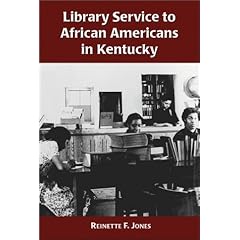
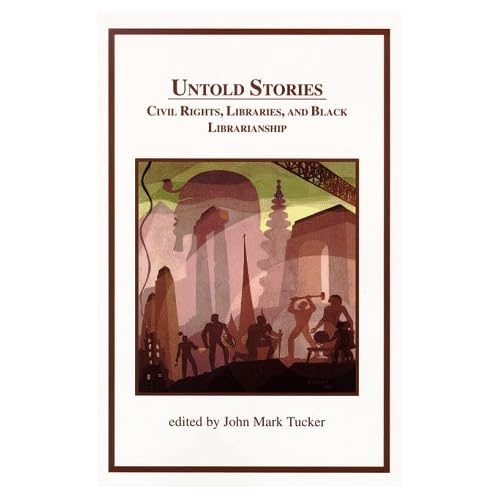
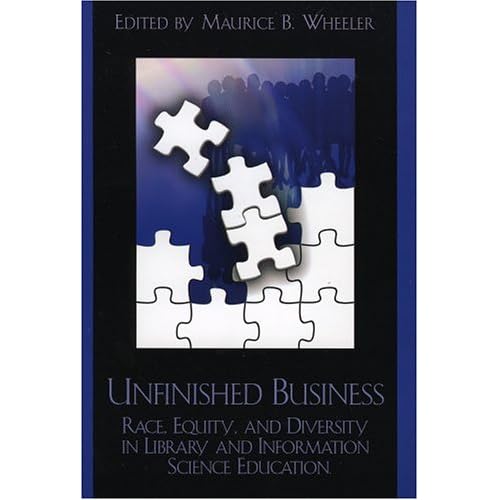
Livros sobre biblioteconomia negra


A primeira bibliotecária a obter o título de Ph.D. em Biblioteconomia, e a primeira reitora da escola de biblioteconomia da Universidade de Atlanta


Eliza Atkins Gleason ( 1909 - 1993), American librarian and educator, was first Dean of the School of Library Service, Atlanta University, and the architect of a library education program that trained more than 90 percent of all black librarians in the United States.

She was born in Winston-Salem, North Carolina, December 15, 1999, to Simon Green and Oleona Pegram Atkins. Her father was the founder and first President of Slater State College, now Winston-Salem State University, and her mother was a teacher.

After graduating from Fisk University in 1930 as a member of Phi Beta Kappa, Elza Atkins received the Bachelor of Science degree from the Library School of the University of Illinois in 1931. In 1936 she received the Master of Arts in Library Science from the University of Carlifornia at Berkeley. She studied at the University of Chicago Graduate Library School and in 1940 became the first black person to receive the Ph.D. in Library Science. She was married to Maurice F. Gleason, a physician, in 1937.

The Dean of the School of Library Service, Atlanta University (1940-46), which opened in 1941, Gleason was aware that the success of the program, even in a period of segregation and rampant discrimination against black persons, depended on a philosophy that was responsive to current human needs but at the same time capable of being remodeled and reshaped when necessary. She wrote, "these objectives are enunciated with the full recognition that no institution can long remain an active force unless it is sensitive to contemporary life, which implies a willingness to accept change. A program of this kind, therefore, predisposes that the objectives of the School of Library Service of Atlanta University are not static but that they may be altered according to the best judgment of the school in what seems to be the present and long-term needs of library service with special reference to the Negro" (Libray Quartely, July 1942).

Gleason´s professional career was distinguished, wide, varied, and productive. In 1931 and 1932 she was Librarian of the Louisville Municipal College. In 1932 she accepted the position of Head of the Reference Department and Assistant Professor at Fisk and served there until 1936. In 1936-37 she ws Director of Libraries at Talladega College, where she became aware of the lack of public library service to black people in the South and began to open the college library resources to black citizens in the surrounding communities. Her interest in access to public libraries for black Americans is reflected in her landmark dissertation, The Southern Negro and the Public Library (1941).

In 1953 Gleason beconme Head of the Reference Department of the Wilson Junior College Library in chicago. In 1953-54 she was Associate Professor of Library Science, Illinois Teachers College, Chicago, from 1954 to 1963. From 1964 to 1967 she was Assistant Librarian at John Crear Library in Chicago. She was Professor of Library Science, Illinois Institute of Technology, from 1967 to 1970. In 1970 she became Assistant Chief Librarian in charge of the regional centers, Chicago Public Library.

Writing in Illinois Libraries (April 1972) about the establishment of the Chicago Public Library´s regional library centers, Gleason manifests her continuing interests in students and education:
In planning for Regional Center service, what potential users did the Chicago Public Library have in ming ? It had in mind "students" - students of all kinds. Can one imagine a greater boon for the high school teen-agers who are in honors or accelerated courses, or for junior college students whose programs are terminal, or for junior and senior college students whose own college libraries may be inadequate or on the wrong side of town when they have time to study ? And finally, there is that vast hoard of "students" who are not entolled in formal courses but who wish to pursue a subject in depth.

In the 1974-75 academic year she again returned to the library education and served as Professor of Library Science at Northern Illinois University.

Active in professional associations, Gleason was the first Afro- American to serve on the ALA Council; she was a member from 1942 to 1946. In 1964 Fisk bestowed upon her its Alumni Award for outstanding accomplishments.

In addition to her book on The Southern Negro and the Public Library: A Studey of the Government and Administration of Public Library Service to Negroes in the South (1941), she wrote A History of the Fisk Universtity Library (1936) and a large number of journal articles.

A woman of great energy and resourcefulness, Gleason led and active community life. She was elected and apponinted to manu positions of ledership. In 1978, for example, she was appointed to the Chicago Public Library Board. While most people are in or considering retirement as they begin their 70th year, she demonstrated her vitaly by beginning - in the fall of 1978 she was appointed Executive Director of the Chicago Black United Fund.

Her death in 1993


Eliza Atkins Gleason Book Award is presented by the Library History Round Table of the American Library Association every third year to recognize the best book written in English in the field of library history, including the history of libraries, librarianship, and book culture.


fonte : World Encyclopedia of Library and Information Services, 1993

O Bibliotecário : O mais improvável heroi do mundo esta de volta para sua maior aventura


Pesquisar este blog

O bibliotecário negro

Este blog tem como único objetivo colecionar materias da internet que tenha os bibliotecários negros e suas conquistas, bem como ações interessantes na divulgação da biblioteca.